Tattoo Studio Hygiene in Tokyo: The Checklist to Run Before You Book
2026.08.20
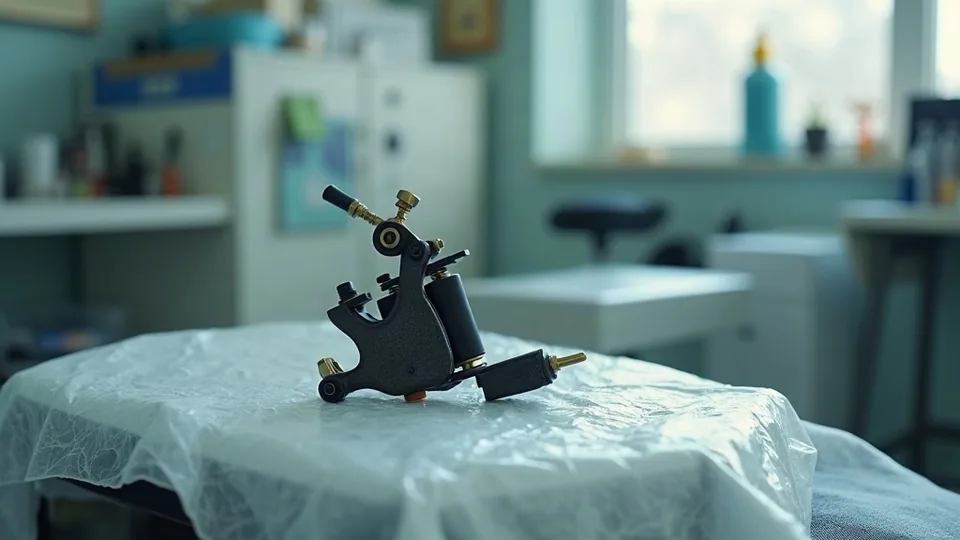
Alongside the artist's skill, hygiene is an essential consideration when choosing a tattoo studio. Are needles and ink caps single-use? How is sterilization verified? Here is what you can check with your own eyes, and with a few questions, before choosing a Tokyo studio, based on industry guidelines and public-health sources.
Why hygiene should be the first thing you check
Tattoo needles pierce the skin and draw small amounts of blood. Japan's Ministry of Health, Labour and Welfare explains that hepatitis B and hepatitis C spread through blood and other body fluids[4]. Its guidance notes that trace amounts of virus left on tattooing equipment can be passed to the next person if the tools are not properly cleaned and disinfected[4]. That is why hygiene deserves to be checked before price or design when you choose a studio[4]. In a systematic review of bacterial infections, the average course of antibiotic treatment across the 21 reports with data was six weeks, and two deaths were linked to infectious complications[6].
The link between tattoos and hepatitis B has been studied repeatedly. A meta-analysis pooling 31 observational studies found a pooled odds ratio of 1.48 (95% confidence interval 1.30 to 1.68) for hepatitis B infection[5]. Pooled observational data cannot prove causation, and it says nothing about any individual studio[5]. The association nevertheless supports taking blood-borne infection risks into account.
Bacterial infections have been reviewed systematically as well. An analysis of 27 papers published between 1984 and 2015 identified 67 cases, excluding mycobacterial infections[6]. Local infections such as abscesses and necrotizing fasciitis were reported, along with systemic ones including endocarditis and septic shock[6]. The review names inadequate hygiene measures and poor aftercare as the main risk factors[6]. Both studio hygiene and your own aftercare therefore matter for infection prevention.
Before you visit: what to ask when you inquire
Your booking inquiry is your first chance to check hygiene. The Japan Tattooist Organization's voluntary guidelines call for clean equipment for every client wherever it touches the treated area, with needles, ink, ink caps, purified water, disposable tubes, sheets, and paper towels all single-use per session[1]. Simply asking "Are needles and ink caps disposed of after every client?" gives you a first read on whether a studio follows these basics.
If any equipment is reused, ask how it is sterilized. New York City's hygiene guide describes steam autoclave sterilization with chemical indicators on the outside and inside of each sterilization pouch (marks that show whether temperature and pressure conditions were met), plus spore tests, a biological indicator, at least once a month to verify the autoclave's performance[2]. Whether a studio can answer "How do you verify sterilization?" in concrete terms is a useful signal.

On the day: watch the needles and ink being opened
On the day of your session, ask to see things opened. The New York City guide recommends opening sterile items, needles included, in front of the client and confirming that the chemical indicator on the sterilization pouch has changed[2]. Cartridge or traditional needle, what matters is that the needle entering your skin is an unused one, unsealed for the first time for you. Don't hesitate to ask for the seal to be broken where you can see it.
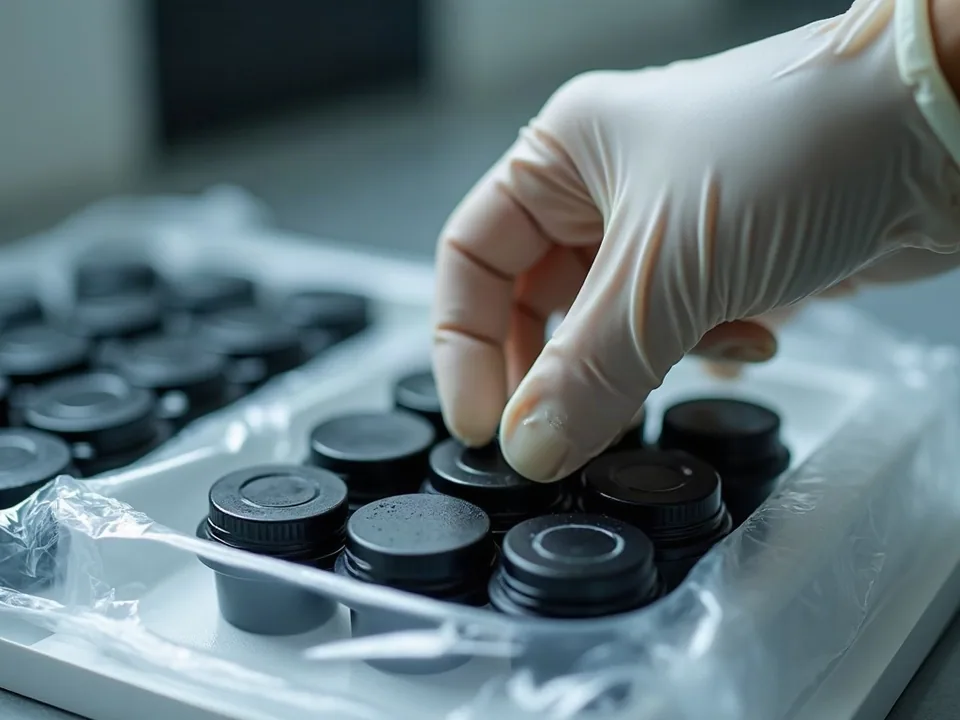
Ink handling also needs to follow hygiene procedures. The same guide says ink should be decanted into disposable containers in just the amount needed, with any leftover discarded, cup and all, after each client[2]. Ink never touches skin straight from the bottle; it goes into small caps and gets used up. The Japan Tattooist Organization's guidelines likewise make ink and ink caps single-use per session[1]. Rows of small ink caps on the workstation are something you can verify with your own eyes.
Disposable gloves: wearing them is not enough
Glove use has detailed rules. The New York City guide calls for changing gloves not only between clients, but whenever the artist steps away mid-session, and whenever a glove tears or is contaminated: take them off, wash hands, put on a fresh pair[2]. If the artist walks off to fetch something, do they come back wearing the same gloves? That is something you can observe from the table.
The Japan Tattooist Organization's voluntary guidelines also say disposable gloves are to be replaced when damaged and every time they are removed, and discarded after the session[1]. Changing gloves is a basic measure for preventing blood-borne infection. Whether gloves get changed during the session is another point worth watching.
How to check that an autoclave is working
An autoclave kills microorganisms on equipment with high-temperature steam. But judging a studio by whether the machine exists is not enough. The New York City guide likewise requires chemical indicators on sterilization pouches and spore testing at least monthly to verify performance[2]. These checks confirm whether the device is working correctly.
A spore test uses heat-resistant bacterial spores to periodically confirm that the autoclave is actually sterilizing at full performance. This checks the effectiveness of the sterilization process. As a client, asking "Do you keep sterilization records or run spore tests?" can help you understand how the studio checks sterilization.
Why the waiting area and the work area are separated
The Japan Tattooist Organization's guidelines call for separating the tattooing booths, the sanitation area where contaminated equipment is cleaned, and the waiting area, so that clients being tattooed and other visitors do not mix[1]. Alongside privacy, separation helps prevent contamination. Keeping apart the places where blood may be present, the places that must stay clean, and the places people pass through is how contamination is kept from spreading.
When you arrive, look at whether the work space is partitioned from the waiting area, and whether used equipment is washed somewhere separate from the tattoo stations. If a companion can wander freely into an active booth, the areas may not be adequately separated.
The risk that remains even in a clean studio: contaminated ink
Ink contaminated at the factory can pose a risk even when a studio follows hygiene procedures. The US CDC reported a cluster of tattoo-associated nontuberculous mycobacterial skin infections across four states in 2011 and 2012[3]. In the New York cluster, 14 confirmed, 4 probable, and 1 possible case were identified, and bacteria indistinguishable from patient isolates were recovered from unopened bottles of pre-diluted grey ink[3]. It is a case that points to contamination during manufacturing.
In response, the CDC recommends using only products made for tattooing, diluting ink only with sterile water when dilution is needed, and maintaining aseptic technique, including hand hygiene and disposable gloves[3]. As a client, asking what the studio dilutes its ink with is one more check you can make. Even when you can see unopened packs and single-use caps, infection risk never reaches zero. Working through the points you can verify, one by one, is still the realistic way to bring it down.
If something feels wrong, you are free to walk away
If you arrive and things differ from what you were told, you can decline the session. Tattooing permanently changes the skin. Going home to think it over is safer than climbing onto the table with doubts about hygiene. Calm, concrete answers to your questions are one signal, but on their own they do not guarantee single-use needles, proper sterilization, or glove changes.
Refunds of deposits and cancellation fees, though, follow each studio's booking terms and your individual agreement. A free, unconditional cancellation is not guaranteed after booking, so check the cancellation policy when you book. Note that under Article 9, Paragraph 1, Item 1 of Japan's Consumer Contract Act, the portion of a cancellation fee that exceeds the average loss arising from termination of similar contracts, taking into account factors such as the timing of cancellation, is void[7]. Clarifying the financial terms in advance can help you decide whether to proceed if you have concerns on the day.
The checklist: before you visit, and before the needle
Before you visit, ask about single-use needles and ink caps, how any reused equipment is sterilized and how that is verified, and the cancellation policy. Before the session, use your eyes: sterile items opened in front of you, the changed indicator on the pouch, ink decanted into small caps and used up, glove changes, and the separation between waiting and work areas[1, 2]. You can make these observations without specialist knowledge.
Use the checklist to compare studios and clarify any concerns before your session. Look for concrete answers and a willingness to open sterile items in front of you. When choosing among Tokyo's studios, make hygiene a priority alongside the work you want.
FAQ
How can I confirm, as a client, that the needles are single-use?
Ask for the seal to be broken in front of you right before the session. US public-health guidance also recommends opening sterile items in front of the client and checking that the indicator on the sterilization pouch has changed. Cartridge or traditional needle, what matters is that it is unused and opened for the first time for you.
Is a studio with an autoclave automatically safe?
The machine alone tells you little. Public-health guidance expects chemical indicators checked at every cycle and spore tests roughly once a month to confirm the device is actually working. Try asking, "How do you verify your sterilization?"
Does good studio hygiene prevent infection completely?
No. In the US, bacteria indistinguishable from patient isolates were found in unopened pre-diluted ink, and factory contamination is beyond any studio's control. Even so, verifying what you can, from single-use items to sterilization checks, meaningfully lowers the risk.
Can I decline the session over hygiene concerns after I have booked?
Yes. Deposit refunds and cancellation fees follow each studio's terms and your agreement, so check the cancellation policy at booking time. Knowing the terms in advance lets you decide without hesitation if something feels wrong on the day.
References
- [1] 一般社団法人 日本タトゥーイスト協会. タトゥースタジオにおける衛生管理に関するガイドライン. (一般社団法人 日本タトゥーイスト協会, 2019). Link
- [2] Eileen Abruzzo, MA(最終改訂準備者). Health Standards and Recommendations for Tattooing. (New York City Department of Health and Mental Hygiene, 2016). Link
- [3] Brenden Bedard, MPH, et al.. Tattoo-Associated Nontuberculous Mycobacterial Skin Infections — Multiple States, 2011–2012. (Centers for Disease Control and Prevention, Morbidity and Mortality Weekly Report, 2012). Link
- [4] 厚生労働省. 日常生活の場でウイルス肝炎の伝播を防止するためのガイドライン. (厚生労働省, 2014). Link
- [5] Siavash Jafari, Jane A. Buxton, Kourosh Afshar, Ray Copes, Souzan Baharlou. Tattooing and risk of hepatitis B: a systematic review and meta-analysis. (Canadian Journal of Public Health, 2012). doi:10.1007/BF03403814. Link
- [6] Ralf Dieckmann, Ides Boone, Stefan O. Brockmann et al.. The Risk of Bacterial Infection After Tattooing. (Deutsches Ärzteblatt International, 2016). doi:10.3238/arztebl.2016.0665. Link
- [7] 消費者庁. 消費者契約法 第9条逐条解説. (消費者庁, 2023). Link
Plan your Tokyo tattoo
Visiting Tokyo and thinking about a tattoo?
See how English booking, travel timing, studio hygiene, payment, and aftercare work before you choose your appointment date.
Related Articles

What the Snake Carries in Japanese Tattooing, from the God of Mount Miwa to the Serpent of Dōjōji
Before it was a monster, the snake was a god. In the Nihon Shoki the god of Mount Miwa appears as a small snake; the water spirit that brings rain is called the mizuchi; and the woman of Dōjōji becomes a serpent and burns the bell. Chronicles, Chinese texts, Noh and Edo serial fiction help explain these meanings in Japanese tattooing, including how the white snake became associated with wealth.
2026.09.11
What the Cherry Blossom Tattoo Has Meant, from the Kokinshū to Benten Kozō
A storm of cherry blossoms in a tattoo is said to stand for a warrior's clean death. Yet the oldest example in the dictionaries of "scattering like a flower" meaning "to die cleanly" is a late-Meiji army song. The sources trace these meanings through the Kokinshū, where blossoms evoke transience and offerings; Saigyō's wish; Edo-stage tattoos, including Benten Kozō's; and modern appropriations.
2026.09.11
Wabori vs Tebori: The Basics of Traditional Japanese Tattooing
Wabori and tebori sound alike, but they name different things: one is a style of imagery, the other a way of putting ink into skin. This guide explains gaku backgrounds, mikiri borders, the use of hand-poking today, and the origins of the word irezumi.
2026.08.24