Kanji Tattoos That Went Wrong, and How to Get Yours Right
2026.06.27
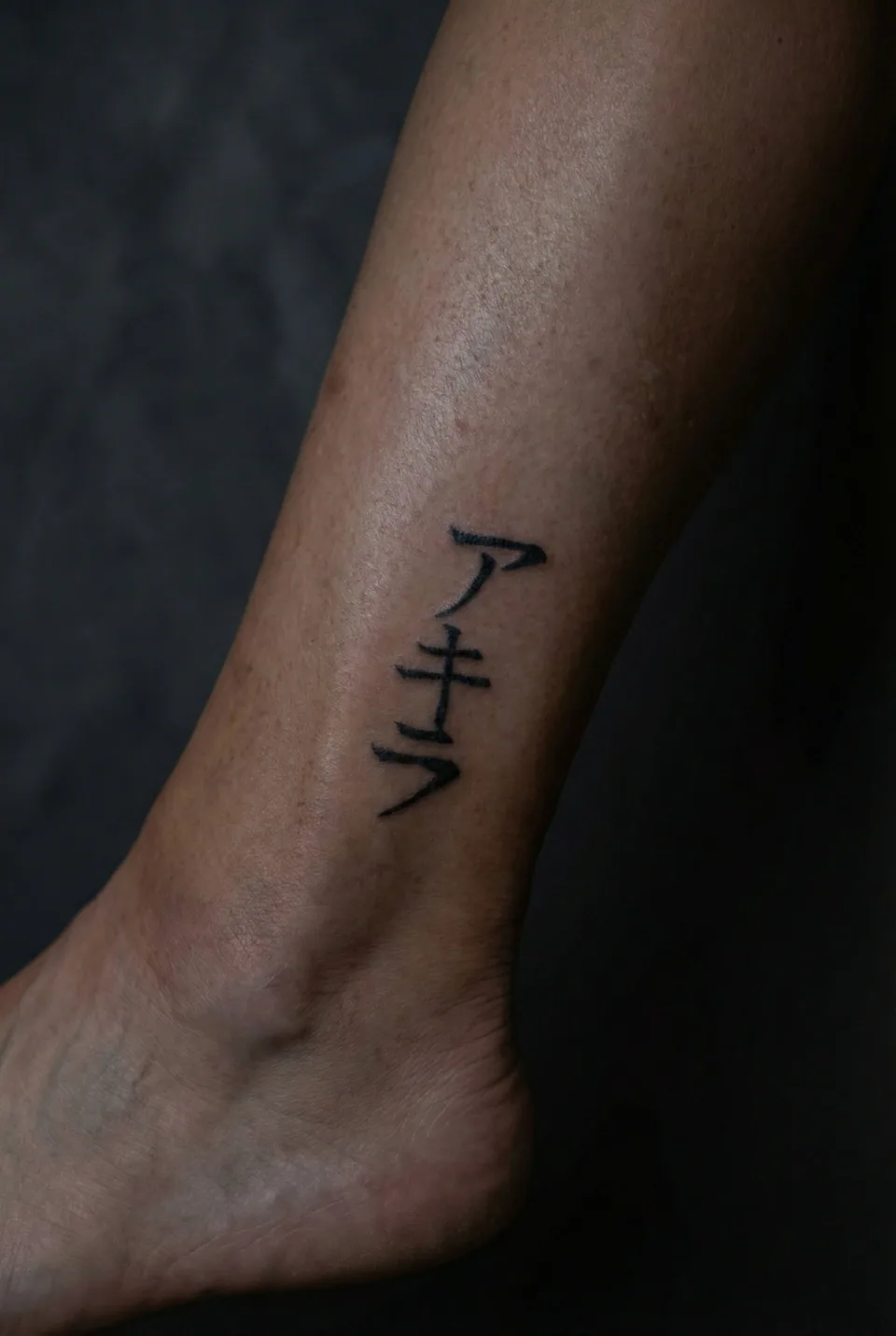
A single misread stroke can turn "big" into "dog," and a quick app translation can leave you wearing the words for a charcoal grill. Many documented kanji tattoo mistakes come from avoidable checks being skipped. The cases and checklist below explain how to check that your tattoo says what you mean.
Introduction
A tattoo chosen for its appearance can turn out to mean something unexpected, such as a small barbecue grill. Kanji and Chinese characters look clean and powerful on skin, which is exactly why people pick them. But the appearance alone cannot tell you whether the characters mean what you intend.
These failures often trace back to avoidable causes: a translation app choosing the wrong sense of a word, characters copied by someone who cannot read them, a misplaced dot, or a design flipped by an artist unfamiliar with the script. Each can be checked before tattooing begins.
Cases documented in the press and by readers of Japanese and Chinese show how these mistakes happen. They also inform the checklist below and the options for anyone who already has an incorrect tattoo. Sources for the examples and medical information appear below.
Why kanji tattoos go wrong so often
One stroke changes everything
- 大big≠犬dogone extra dot
- 力power≠刀swordthe stroke pokes out
- 土soil≠士scholarwhich line is longer
- 未not yet≠末the endtop line length flips it
Many documented kanji tattoo mistakes involve several small errors, each easy to miss if nobody involved can read the characters.
Machine translation picks the wrong sense
Translation apps are good at gist and bad at nuance. Ask one for a single word like "power" or "free" and it returns one option among several, with no sense of which fits a tattoo. Words also behave differently alone than they do in a phrase. The characters for "seven" and "ring" exist, but stringing them together does not reliably produce "seven rings" in natural Japanese, and the result can name something else entirely. Linguist Victor Mair of the University of Pennsylvania has cataloged tattoos that read like raw Google Translate output, including one likely meant as "In God We Trust" that came out as an ungrammatical string closer to "god credit" [3].
Copying characters nobody in the room can read
A tattoo artist who does not read Japanese or Chinese is, in effect, copying a drawing. They can reproduce the shape faithfully and still have no way to catch a wrong character, a missing stroke, or a design that arrived flipped. The blog Hanzi Smatter, which has documented character-tattoo errors since 2004, is full of pieces where the shapes are drawn competently but the meaning was wrong from the start [1][2].
Look-alike characters and the single wrong stroke
Kanji pack a lot of meaning into a few strokes, so small differences carry big weight. Add one dot to 大 ("big") and you get 犬 ("dog"); the mnemonic learners use is that the big dog has a spot [4]. Let one stroke poke out past a corner and 刀 ("sword") becomes 力 ("power") [5]. Swap which horizontal line is longer and 土 ("earth, soil") turns into 士 ("scholar, gentleman"), while 未 ("not yet") flips to 末 ("end") [4][5]. A tired hand or an unfamiliar eye can cross any of these lines without noticing.
Mirror images, upside-down characters, and menu mix-ups
When the script is unfamiliar, whole characters can end up reversed or inverted, and the wearer may never know. People also borrow characters off restaurant menus, product packaging, and brand logos, assuming a cool-looking word must carry a deep meaning. Often it is just the name of a dish or a company. In these cases, nobody who could read the characters checked the design before it was tattooed.
Kanji is not Chinese: the same character, a different meaning
Same characters, different language
- 手紙Japanese: a letterChinese: toilet paper
- 湯Japanese: hot water, a bathChinese: soup
Japanese kanji were borrowed from Chinese characters more than a thousand years ago, so the two scripts share thousands of shapes. That shared look fools people into thinking a character means the same thing in both languages. Often it does not. Centuries of separate use pulled many meanings apart, which matters enormously when you are about to wear one.
The classic example taught in Japanese classes is 手紙. In Japanese it means "letter," the kind you mail. Written in Chinese, the same two characters point to "toilet paper" [6]. Another favorite is 湯: in Japanese it means "hot water," the character you see on bathhouse curtains, while in Chinese it reads as "soup" [6]. Same shapes, very different message.
Pronunciation diverges too. A character read one way in Mandarin is usually read a completely different way in Japanese, and most kanji carry several possible Japanese readings depending on context. So if your goal is a Japanese tattoo, a design verified by a Chinese reader is not enough, and vice versa. You have to check it in the specific language you intend it to be read in. Appearance alone cannot establish the meaning.
Documented kinds of failure, from people who read the script
Several reputable sources document recurring types of character-tattoo mistakes.
The wrong-word tattoo. The most public recent case is the singer Ariana Grande. In 2019 she got a hand tattoo of 七輪 to celebrate her song "7 Rings." Those characters spell shichirin, a small charcoal grill used for Japanese barbecue, not "seven rings." The story was widely reported by BuzzFeed News and CBS News [7][8]. She later added another character to adjust it, which only underlines the lesson: fixing a kanji tattoo is harder than getting it right the first time.
The gibberish font. Hanzi Smatter has documented examples of so-called gibberish fonts, decorative "alphabets" that map each Latin letter to an unrelated Chinese character. Spell an English name with one and you get a string of real characters that together mean nothing at all, even though the wearer believes the shapes spell their name [1].
Check what the characters actually say. Victor Mair discusses a basketball player’s tattoo, 可以, explaining that it reads as the everyday Chinese phrase "can do, okay" [3]. Characters chosen for their appearance can communicate words the wearer did not intend.
Mirror-image and upside-down characters. Because the orientation of an unfamiliar script is easy to lose, characters can end up tattooed reversed or inverted, sometimes mixed in among correctly oriented ones, so the line reads as nonsense even when each individual shape is real.
These examples show why checking the text matters. Mair's blunt advice after years of these write-ups is to never get a Chinese tattoo without first consulting someone who genuinely reads the script [3]. That single step would have prevented most of what these sources have collected.
The checklist: how to get a kanji tattoo right
Verify before you ink
- Have a native Japanese speaker confirm the meaning and the nuance
- Check the reading, and that it is natural rather than machine-translated
- Confirm the orientation and stroke order before the needle starts
- Choose an artist who can actually read the script
- Decide on purpose between a meaning and a phonetic spelling
Before you book the appointment, check the characters, their meaning, and how the final design will be applied.
1. Get a native check, in the right language. Have the meaning and the exact characters confirmed by someone who actually reads Japanese, rather than relying on an app or someone unfamiliar with the writing system. If you want it read as Japanese, check it with a Japanese reader specifically, since the same characters can mean something else in Chinese [6].
2. Confirm the reading and the nuance, not just a dictionary gloss. Ask what the phrase actually conveys to a native reader. Does it sound natural, poetic, blunt, or like a label off a product? A word that is technically correct can still read as strange or unintentionally funny.
3. Confirm orientation and stroke order. Make sure the design is not mirrored or upside down, and that the strokes are formed correctly. This is where 大 stays "big" instead of becoming 犬 "dog," and 未 stays "not yet" instead of 末 "end" [4][5]. Ask to see the final stencil and have your native checker look at it.
4. Pick an artist who reads the script, or who works with someone who does. An artist who can read Japanese will catch a flipped stencil or a wrong stroke before it is permanent. If your artist cannot read it, that single safeguard is missing, and you are relying entirely on your earlier checks holding up.
5. Decide between meaning and sound on purpose. Foreign names and words can be written two ways: by meaning, choosing kanji for what they say, or phonetically, usually in katakana, to match how a name sounds. Each gives a different result. Knowing which one you are choosing, and why, keeps you from accidentally turning a name into a random sentence [3].
If you already have a kanji tattoo you regret
If you regret it, there are a few realistic paths, and the right one depends on the tattoo and on how you feel about it.
Laser removal. A dermatologist or qualified clinic can break up the ink with a laser so your body clears it over time. Removal requires a course of treatment. The American Society of Plastic Surgeons notes it typically takes multiple sessions over many months or even more than a year, depending on the location, colors, and size of the tattoo [9]. Black tends to respond well; some colors are stubborn.
Cover-up. A skilled artist can design new work over the old characters. Dense or dark tattoos sometimes need a few laser sessions first to lighten them enough for a clean cover [9]. A cover-up is often faster than full removal and gives you something you actually want in its place, but it does limit the new design's size and palette.
Owning it. Not every imperfect tattoo needs fixing. If the story behind it makes you smile, including the mistake, that is a perfectly good reason to keep it. Plenty of people keep a flawed first tattoo precisely because of how they got it. There is no rule that says it has to be erased.
Where checking the meaning fits in
Many of these mistakes could have been caught by having a fluent reader check the design before tattooing. That check cannot prevent a later change of taste, but it can help avoid unintended words, meaningless phrases, and incorrect characters.
This is the practical case for using a studio with Japanese-literate artists if you want a kanji or Japanese tattoo. When the person drawing it can read it, your intended meaning, the characters, the reading, and the orientation all get verified by the same hands that do the work. Evis Ink Tokyo states that it is a Tokyo studio working with foreign visitors, with native Japanese speakers on hand to confirm what a phrase actually says, and how it reads to a native eye, before anything becomes permanent.
Whatever studio you choose, use the checklist before proceeding. Have it read by someone fluent, confirm the nuance and the orientation, and work with an artist who can read what they are inking. Do that, and a kanji tattoo can be exactly what you hoped for: a few clean characters that say precisely what you mean.
References
- Tang, Tian. Hanzi Smatter, a blog dedicated to the misuse of Chinese characters in Western culture (founded 2004). https://hanzismatter.blogspot.com/
- Barringer, David. "Suspicious Characters." PRINT Magazine, 2008. https://www.printmag.com/id-mag/suspicious-characters/
- Mair, Victor. "Chinese tattoos." Language Log, University of Pennsylvania, August 3, 2013. https://languagelog.ldc.upenn.edu/nll/?p=5528
- Nihongo Master. "The Most Confusing Japanese Kanji (and how to tell the difference)." https://www.nihongomaster.com/blog/the-most-confusing-japanese-kanji-and-how-to-tell-the-difference
- Chu-nibyo. "Kanji Lookalikes: Don't Confuse 力, 刀, 土, 士, 天, and 夫 Again." https://www.chu-nibyo.com/blog/2767463_the-confusing-kanji-a-guide-to-separating-lookalikes-vs-vs-vs
- Kokoro Media. "Not All Kanji Are Chinese: Understanding Japanese Kanji Creations and False Friends." https://kokoro-jp.com/culture/4587/
- Blackmon, Michael. "Ariana Grande's New Tattoo Fail Says 'BBQ Grill' In Japanese Instead Of '7 Rings'." BuzzFeed News, January 30, 2019. https://www.buzzfeednews.com/article/michaelblackmon/ariana-grande-tattoo-fail-japanese-bbq-7-rings
- CBS News. "Ariana Grande's tattoo says 'BBQ Grill' in Japanese instead of '7 rings'." January 31, 2019. https://www.cbsnews.com/news/ariana-grande-hand-tattoo-ariana-grande-fans-say-her-tattoo-says-bbq-grill-in-japanese-instead-of-7-rings/
- American Society of Plastic Surgeons. "Regret or relief? Options for tattoo removal." https://www.plasticsurgery.org/news/articles/regret-or-relief-options-for-tattoo-removal
FAQ
Why do so many kanji tattoos end up meaning the wrong thing?
Usually because nobody who can read the characters checked the design first. Translation apps pick the wrong sense of a word, artists copy shapes they cannot read, and characters that differ by a single stroke get confused. Having a fluent reader verify the meaning, reading, and orientation before you commit prevents many of these.
Does a character mean the same thing in Japanese and Chinese?
Not always. The two scripts share thousands of characters, but many meanings have drifted apart. For example, 手紙 means 'letter' in Japanese but points to 'toilet paper' in Chinese, and 湯 means 'hot water' in Japanese but 'soup' in Chinese. If you want a Japanese tattoo, verify it specifically with a Japanese reader.
What is the most famous kanji tattoo mistake?
Ariana Grande's 2019 hand tattoo. She got 七輪 to honor her song '7 Rings,' but those characters spell shichirin, a small Japanese charcoal grill. It was widely reported, and her attempt to fix it still did not produce the phrase she wanted, which shows how much easier it is to get a kanji tattoo right the first time.
Can I fix a kanji tattoo I already regret?
Yes. You have three main options: laser removal by a dermatologist or clinic, which takes multiple sessions over many months or even more than a year; a cover-up by a skilled artist, sometimes after a few lightening sessions; or simply keeping it if the story behind it makes you smile. The American Society of Plastic Surgeons outlines the removal process in detail.
How do I make sure my kanji tattoo is correct before getting it?
Run a short checklist: have the meaning and exact characters confirmed by a fluent reader in the language you want, confirm the nuance and not just a dictionary gloss, check that nothing is mirrored or upside down, and pick an artist who reads the script. Using a studio with Japanese-literate artists folds most of these checks into the work itself.
Kanji tattoo in Tokyo
Choose kanji that says what you intend
Review meaning, nuance, brush style, placement, and legibility with Japanese-speaking artists before the design reaches skin.
Related Articles

What the Snake Carries in Japanese Tattooing, from the God of Mount Miwa to the Serpent of Dōjōji
Before it was a monster, the snake was a god. In the Nihon Shoki the god of Mount Miwa appears as a small snake; the water spirit that brings rain is called the mizuchi; and the woman of Dōjōji becomes a serpent and burns the bell. Chronicles, Chinese texts, Noh and Edo serial fiction help explain these meanings in Japanese tattooing, including how the white snake became associated with wealth.
2026.09.11
What the Cherry Blossom Tattoo Has Meant, from the Kokinshū to Benten Kozō
A storm of cherry blossoms in a tattoo is said to stand for a warrior's clean death. Yet the oldest example in the dictionaries of "scattering like a flower" meaning "to die cleanly" is a late-Meiji army song. The sources trace these meanings through the Kokinshū, where blossoms evoke transience and offerings; Saigyō's wish; Edo-stage tattoos, including Benten Kozō's; and modern appropriations.
2026.09.11
Wabori vs Tebori: The Basics of Traditional Japanese Tattooing
Wabori and tebori sound alike, but they name different things: one is a style of imagery, the other a way of putting ink into skin. This guide explains gaku backgrounds, mikiri borders, the use of hand-poking today, and the origins of the word irezumi.
2026.08.24