What Do Wabori Motifs Mean? A Field Guide to Flowers, Dragons, Hannya, and Mythical Beasts by Category
Published · Updated
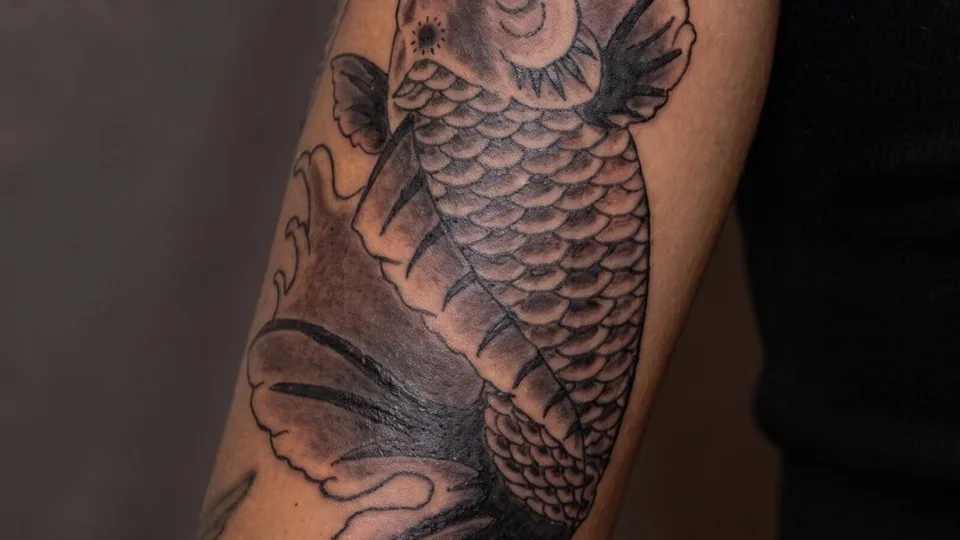
What does the dragon represent? What does the hannya mask carry? Wabori (traditional Japanese tattoo) designs hold meanings passed down through kimono patterns, mythology, Noh theater, and ukiyo-e prints. This article sorts the main motifs into categories: flowers, dragons, snakes and koi, masks, mythical beasts, and background elements, so you can look up the meaning and origin traditionally tied to each one in a single line.
Finding Wabori Motifs by Category
Wabori designs come in so many varieties that it's hard to find what you're looking for without knowing their names. This article sorts them into six categories: flowers, dragons, snakes and koi, masks, mythical beasts, and background elements. Flowers include sakura and peonies, mythical beasts include the phoenix and qilin, and so on: deciding on a category first makes it easy to find the motif you want. Water and clouds, which set off the main subject, are covered together at the end. Each motif comes with a one-line summary, so even a quick skim will give you a feel for the whole picture.
The meanings introduced here are the ones traditionally associated with these motifs in kimono patterns, Chinese auspicious designs, Noh masks, and ukiyo-e prints [1, 2]. An auspicious design, or kissho-mon, is a pattern that carries a wish for good fortune. Many traditional Japanese patterns express hopes for long life, growth, or a bountiful harvest [1]. Once you see each motif as carrying a prayer handed down from people long ago, wabori starts to look a little different.
A 2018 study surveying 6,438 web respondents aged in their twenties through fifties, along with 90 tattooed people recruited through personal connections, treats traditional Japanese designs as wabori [12]. The study's introduction draws on prior literature to lay out the background on tattoo meanings and how people choose them [12]. Today, the common approach to choosing a wabori motif is to learn its origin and then layer your own feelings onto it.
Six categories of wabori motifs
- Flowers
- Sakura and peony
- Dragon
- A figure in Chinese legends
- Snake and koi
- Snake: mythology and religious beliefs
- Koi: the Chinese Dragon Gate legend
- Mask
- Hannya from Noh theater
- Mythical beasts
- Phoenix, qilin, shishi lion, and tiger
- Background
- Water, waves, and clouds
The Meanings Behind Sakura and Peony
Sakura (cherry blossom) has long been admired as a flower of spring and has been stylized into countless decorative forms [1]. Woven into Japanese culture and daily life across its long history, it has become a symbol of Japan and appears as a motif in countless works and products [10]. Some also point out that the flower's beauty, paired with how briefly it blooms, makes it a stand-in for the Japanese sense of life's fleetingness [10]. In a word, sakura reflects a distinctly Japanese beauty and a feeling for all things that fade.
The peony (botan) is native to China. Known for its lavish blooms, it has been called the "king of flowers" or the "flower of wealth and honor," and has long been loved as a symbol of riches and prestige [3]. Peony patterns and paintings appear widely on ceramics, lacquerware, and in fine art [3]. In Japanese design, the pairing of the peony with the shishi, a lion-like mythical creature, is especially well known as "shishi ni botan" [1]. In a word, the peony stands for abundance and pride. Its large, open blooms bring brilliance to a piece, whether as the main subject or as a supporting motif that sets off others.
The Dragon: A Mythical Beast of Good Fortune and Protection
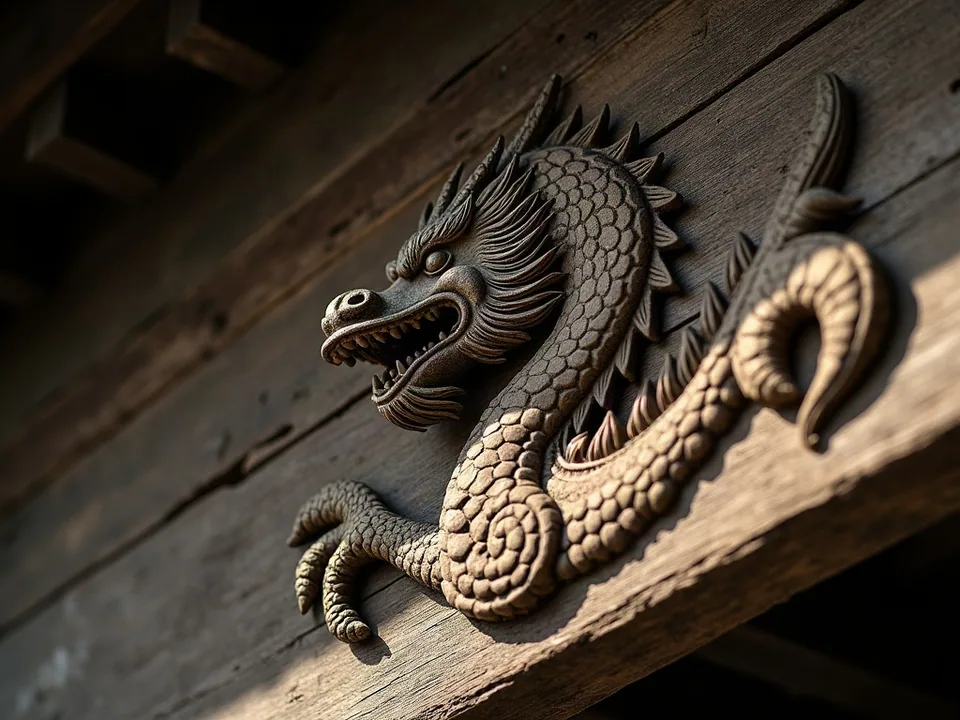
The dragon (ryu) is a mythical creature from China, introduced in Japanese design as an auspicious motif representing all-encompassing power [1]. The Kyoto National Museum explains, citing the longpao robes worn by emperors of the Qing dynasty (1616 to 1912), that patterns in China were used to pray for happiness and long life by investing them with auspicious meaning [2]. The dragon was deified as an almost all-powerful god, revered as the supreme animal of good omen, and served as a symbol of the emperor [2]. In a word, the dragon is the highest-ranking mythical beast, combining every form of power with good fortune.
The dragon is also deeply tied to Buddhism. The dragon and tiger were incorporated as the Azure Dragon and White Tiger among the Four Guardian Gods of the four directions, regarded as protectors of the east and west respectively [8]. As Buddhism, born in India, traveled through mainland China before reaching Japan, the dragon and tiger are said to have arrived as guardians of the Buddhist dharma [8]. Beyond being a symbol of good fortune, the dragon also has a face as a protective deity. Which side you want to emphasize will shape your composition and the motifs you pair it with.
Snakes and Koi: Meanings Entrusted to Creatures of the Water
Because snakes repeatedly shed their skin, they have been seen as symbols of death and rebirth [6]. But that's not the whole story. According to Kokugakuin University, snakes have been worshipped as gods in cultures around the world [6]. At the same time, they have been feared as creatures whose venom brings misfortune, and reverence and dread are said to be two sides of the same coin [6]. Yamata no Orochi, the eight-headed serpent that appears in the Kojiki, is also introduced as a god with a snake's body [6]. In a word, the snake holds both the power to be reborn and a power that people have both revered and feared.
The koi has long been a symbol of success and career advancement, drawn from the Chinese legend of the toryumon, or "dragon gate" [1]. In this legend, a koi that swims up a raging rapid is transformed into a dragon. In the late Edo period, the motif of "koi climbing a waterfall" became popular among samurai families and the townspeople of Edo, and was used on ceremonial garments [1]. In a word, the koi represents the drive to rise above hardship. True to the waterfall motif, pairing it with flowing water helps tell the story. We cover background water elements later in this article.
Hannya: A Mask That Holds Sorrow as Well as Rage
The hannya is a Noh mask depicting a vengeful female spirit, carved with two gold horns and a wide-open mouth baring its teeth [4]. It is used for roles of women driven to demonhood by jealous rage and grief, in plays such as Aoi no Ue, Kurozuka, and Dojoji [4]. Because its fearsome face leaves such a strong impression, it's often taken simply as a "mask of rage." But what matters most about the hannya is that it carries as much sorrow as anger.
Commentary on Aoi no Ue describes the hannya as a mask for a woman who, consumed by jealousy, is midway through transforming into a serpent while still retaining her human heart [5]. Its horns, furrowed brow, and bared fangs express intense jealousy, resentment, and grief [5]. In a word, it is the face of a woman carrying sorrow and a human heart beneath her rage. When you choose a hannya design, try to appreciate this tangle of emotion, not just the fear it inspires. How the expression is rendered determines whether the fear or the sorrow comes through first.
Phoenix, Qilin, Shishi, and Tiger: The Meanings of the Mythical Beasts
The phoenix (ho-o) is a mythical bird from China and one of the most representative auspicious motifs [1]. In the kiri-take-ho-o pattern, one of the yusoku patterns that have adorned aristocratic dress since the Heian period, paulownia and bamboo form the center, with the phoenix placed in the sky and the qilin on the ground [7]. Both the phoenix and the qilin appear in Chinese legend as animals that bring peace to the world [7]. Because they were said to appear only when the world was justly governed, the pattern also became a special emblem of sovereignty [7]. In a word, both creatures herald the arrival of a peaceful age.
The shishi is a mythical creature resembling a lion, and its pairing with the peony in "shishi ni botan" is especially famous [1]. The tiger forms a pair with the dragon, regarded as the White Tiger of the four guardian gods and protector of the west [8]. Both the dragon and the tiger were deified as beings beyond human understanding, and their contrast has also been read as a symbol of heaven and earth, or of water and land [8]. In a word, the shishi is a mythical beast paired with a gorgeous flower, and the tiger is a guardian deity standing alongside the dragon. Each works as a striking motif on its own, but knowing its traditional counterpart opens up more options for composition.
The Role of Water and Clouds in the Background
In wabori compositions, the main motif is often set off with water or clouds. Water, which sustains daily life as drinking water and irrigation, has long been a source of inspiration for paintings and designs through its forms and the scenery of waterside places [9]. The Kyoto National Museum introduces flowing water, swirling water, splashes, the mood of a waterside scene, and the seigaiha pattern, an abstracted rendering of waves, as examples of patterns representing water [9]. Seigaiha is a design of overlapping semicircles used to depict waves.
Rather than pinning the background water down to a single symbolic meaning, it's more natural to see it as an expression that gives the composition flow and momentum [9]. As for clouds, the reishi-un, or lingzhi mushroom clouds drawn around the dragon on the longpao robe, are explained as auspicious clouds symbolizing eternal youth [2]. In a word, water is the current that sustains daily life, and the lingzhi cloud is a cloud that wishes for eternal youth. Even the same dragon or koi will leave a very different impression depending on whether the background is a swirling wave or a calm current. Once you've settled on your main motif, consider choosing the background together with it.
Do Color, Direction, and Combination Change the Meaning?
There are cases where even the same motif is read differently depending on its color. In Noh, the hannya mask comes in white, red, and black versions, each carrying a different degree of refinement and intensity [5]. In Aoi no Ue, the white hannya, the most dignified of the three, is used for the role of a woman of high status [5]. That said, this is a convention of the Noh mask world and isn't something to apply directly to color choices in wabori. Talking through what you want your colors to express with your tattoo artist during the design consultation will help you get a clearer picture of the finished piece.
Combinations, too, have traditional forms long loved in Japanese art: the shishi paired with the peony in "shishi ni botan" [1], the dragon and tiger standing together as guardian deities [8], and the kiri-take-ho-o pattern, which places the phoenix and qilin alongside paulownia and bamboo [7]. The pairing of paulownia and phoenix, regarded as a particularly dignified pattern, was even adopted into the clothing of commoners [7]. Knowing these classic pairings can give you a hint for expanding a single motif into a fuller composition.
At the same time, the 2018 study notes that today, choosing a wabori motif has become a personal matter [12]. What meaning you attach to the direction a koi faces or how a dragon is composed is up to each individual. If you have a combination or orientation in mind, let us know what you want it to express when you book your consultation. That makes it easier to discuss the composition with both tradition and your own wishes in mind. And if it's hard to put into words, bringing in a picture or photo you like is more than enough.
Pairings beloved in traditional art
- Shishi and peony
- Dragon and tiger
- East: Azure Dragon; West: White Tiger
- Dragon = Azure Dragon of the East; Tiger = White Tiger of the West (both guardian deities)
- Paulownia, bamboo and phoenix
- Centered on paulownia and bamboo
- Phoenix in the sky, kirin on the ground
Tracing Origins Further: Look Them Up in the Field Guide
Some ukiyo-e prints, when traced back, lead to narrative paintings from China. Commentary from the University of Tokyo's University Museum discusses the relationship between Utagawa Kuniyoshi's Suikoden series, Katsushika Hokusai's Shinpen Suikogaden, and Chinese illustrations of the Water Margin [11]. According to this commentary, Lu Zhishen, as depicted in Kuniyoshi's "Kagaya edition" of the Suikoden, is portrayed as a rough-edged monk [11]. For designs based on the Water Margin, this kind of connection between Edo-period ukiyo-e and Chinese narrative painting has been pointed out.
Other motifs, too, trace back to Chinese auspicious patterns and legends [1, 2, 3], the dragon and tiger that arrived with Buddhism [8], Noh masks [4], and Japanese mythology [6]. Once you've grasped the category and one-line meaning here, try opening the matching entry in our motif field guide. Differences in rendering and fuller origin stories are covered on each guide page and in our individual articles. If you find a design you like, feel free to bring it straight to your consultation.
FAQ
What does the dragon mean in wabori?
The dragon is a mythical creature from China, introduced in Japanese design as an auspicious motif representing all-encompassing power. In China it was revered as the supreme animal of good omen and served as a symbol of the emperor. The dragon and tiger, which arrived together with Buddhism, are regarded as guardians of the Buddhist dharma.
Is the hannya mask only about anger?
Not only anger. In Noh, the hannya mask is used for the role of a woman driven to demonhood by jealous rage and grief. Its horns, furrowed brow, and bared fangs express intense jealousy, resentment, and sorrow.
What is the origin of the koi tattoo?
The koi has long been a symbol of success, drawn from the Chinese legend of the toryumon, or dragon gate. In the late Edo period, the "koi climbing a waterfall" motif became popular among samurai families and the townspeople of Edo, and was used on ceremonial garments.
Does every motif mean the same thing to everyone?
There are traditionally associated meanings and origins for each motif. That said, a 2018 study notes that choosing a design today has become a personal matter, with motifs often chosen as a form of fashion. We encourage you to learn the origin of a motif and then layer in your own meaning.
References
- [1] ジャパンサーチ. 日本の文様2 動物、植物. (ジャパンサーチ, n.d.). Link
- [2] 河上. 中国の吉祥文様 龍袍. (京都国立博物館, 1995). Link
- [3] 京都国立博物館. 富貴の花 牡丹. (京都国立博物館, 2020). Link
- [4] 日本芸術文化振興会. 能・世阿弥 能面と能装束 般若. (文化デジタルライブラリー(日本芸術文化振興会), n.d.). Link
- [5] 日本芸術文化振興会. 『葵上』を鑑賞する 後シテ・鬼相の六条御息所の生霊. (文化デジタルライブラリー(日本芸術文化振興会), n.d.). Link
- [6] 谷口雅博. 自然の驚異をうつす蛇への信仰 ヤマタノオロチ退治神話を知る. (國學院大學メディア, 2018). Link
- [7] 京都国立博物館. 貴族のきものを飾るデザイン 有職文様の世界. (京都国立博物館, 2015). Link
- [8] 京都国立博物館. 龍虎 仏法の守護神. (京都国立博物館, 2015). Link
- [9] 京都国立博物館. 染めと織りの文様 水のかたち. (京都国立博物館, 2022). Link
- [10] 在カナダ日本国大使館. さくら:日本・カナダ関係を彩る歴史. (在カナダ日本国大使館, 2021). Link
- [11] 東京大学総合研究博物館. 真贋のはざま. (東京大学総合研究博物館, 2001). Link
- [12] 鈴木公啓、大久保智生. いれずみ(タトゥー・彫り物)の経験の実態および経験者の特徴. (対人社会心理学研究, 2018). doi:10.18910/70538. Link
Japanese tattoo in Tokyo
Turn Japanese tattoo history into a custom design
Explore traditional motifs, modern Japanese compositions, and the consultation process with our English-friendly Ueno studio.
Related Articles
The Meaning of Lotus Tattoos and How the Flower Appears in Wabori
Lotus tattoos are often described as a flower that "blooms pure from the mud." Yet this meaning shifts slightly depending on the source: Buddhist scripture, Japanese Buddhist art, and the Chinese essay "Ai Lian Shuo." Tracing these sources, this article looks at what the lotus means and the role the flower plays within wabori.
2026.11.02
Oni Tattoo Meaning vs. Hannya: Telling Them Apart by Horns and Fangs
Oni and hannya are both fearsome, horned faces, but they come from different places. Oni is a broad category shaped by beliefs about the dead and Buddhist influence, while hannya is one specific demon-woman mask used in noh theater. This article traces where each comes from, offers visual clues for telling them apart, and walks through how to decide which one to get tattooed.
2026.10.12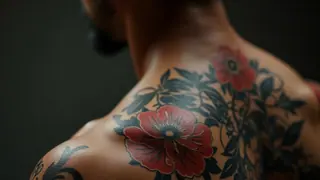
Wabori Color Basics: Sumi and Vermilion, and How Yellow, Green, and Blue Were Used
What has guided the choice of colors in wabori (traditional Japanese tattooing)? Drawing on dated, documented sources, an English-language record from 1902, Kuniyoshi's Suikoden ukiyo-e prints, and pigment analyses of woodblock prints, we trace how sumi (dark ink), vermilion, yellow, green, and blue have been used. This is not a fixed color chart, but the basic combinations that emerge from the sources.
2026.11.02