Oni Tattoo Meaning vs. Hannya: Telling Them Apart by Horns and Fangs
Published · Updated
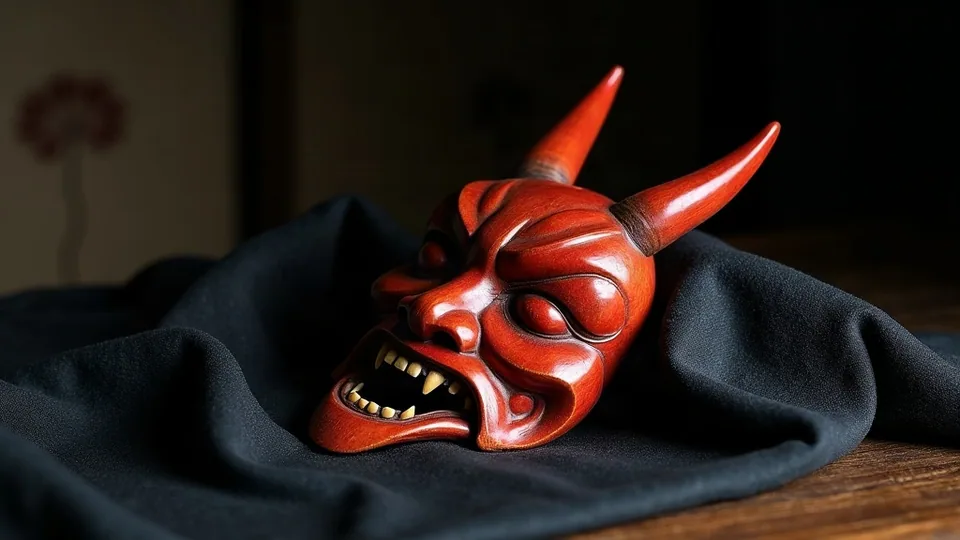
Oni and hannya are both fearsome, horned faces, but they come from different places. Oni is a broad category shaped by beliefs about the dead and Buddhist influence, while hannya is one specific demon-woman mask used in noh theater. This article traces where each comes from, offers visual clues for telling them apart, and walks through how to decide which one to get tattooed.
Oni and Hannya: Same Horned Face, Different Origins
Oni and hannya come up together often in tattoo consultations. Both have horns, bared fangs, and faces meant to intimidate. But their origins are completely different. Hannya is a type of mask used in noh theater, worn for roles where jealousy, rage, or grief turn a woman into a demon [1]. Oni, on the other hand, is a much broader category, not tied to any single play or story. It's described as an imaginary, superhumanly strong creature that threatens human life, and its appearance has shifted over time [4].
In other words, hannya and oni are not the same thing. Hannya is a specific noh mask used to play a woman who has become a demon. We cover the origins of the hannya mask itself in detail in another article, so here we put oni at the center and look at how it differs. We'll trace where oni comes from and offer pointers for telling the designs apart and choosing between them.
Faces with similar horns
- Oni
- Spirits of the dead
- Buddhist gaki, yasha, rasetsu
- Wardens of hell
- Rituals to ward off plague and disaster
- A multifaceted being
- Hannya
- Noh mask of a vengeful spirit (female)
- Role of a woman turned demon by jealousy
- Aoi no Ue, Kurozuka, Dojoji
- A specific female demon mask
Oni Comes From More Than One Source
The word oni did not originally mean a horned, fanged monster. The dictionary Wamyō Ruijushō describes oni as the souls or spirits of the dead, reluctant to show themselves and hidden from view [3]. An invisible spirit of the dead: that was one of the word's older meanings. Buddhist influence then layered on top of this, and oni came to be spoken of interchangeably with rasetsu, gaki, and the red and blue demons of hell [4].
The now-familiar image of oni, horned and fanged, wearing a tiger-skin loincloth, with a violent temperament, took shape later under these influences [4]. By the medieval period, oni had become widespread in popular imagination, appearing often in paintings and performing arts [3]. Oni could have one or more horns, a tiger-skin loincloth, and an iron club, and while the common image was largely masculine, female oni existed too [3].
Oni grew out of overlapping ideas: spirits of the dead, Buddhist demons, hell's guards, and bringers of disaster. You can't pin it down to just a creature that lives in hell or in the mountains. When getting an oni tattoo, it helps to remember that the meaning shifts depending on which oni you have in mind.
Feared, Yet Also a Force That Wards Off Disaster
Oni has more than one frightening face. Think of the bean-throwing ritual at Setsubun. Behind that demon-chasing custom stands the figure of hōsōshi, who drove away oni believed to bring plague [9]. Hōsōshi wore a fearsome four-eyed mask and used weapons and noise to chase off invisible plague demons [9]. In other words, the one driving out oni also wore a mask as frightening as oni itself.
Exhibition notes from the National Museum of Japanese History explain that premodern people believed plague was brought by invisible, oni-like beings [5]. As in the ritual where hōsōshi drives out plague demons, a being can be superhumanly strong and threatening [4, 9], yet that same strength can turn around to ward off disaster. Oni imagery carries both of these faces, one that threatens and one that protects.
It's natural, given this tradition, that some people read 'protection' or 'strength' into an oni tattoo. That said, oni doesn't carry one fixed meaning across every era and region. It's entirely up to the person getting tattooed to decide what meaning to carry. Use the origins as a reference, then think about what you want the design to mean to you.
Hannya: Noh's 'Demon Woman' Mask
Hannya is one of the masks used in noh. Within noh classification it falls under the vengeful-spirit female masks, with two golden horns and a mouth opened wide to bare its teeth [1]. It's worn for roles in which jealousy-driven rage or grief turns a woman into a demon, appearing in plays such as Aoi no Ue, Kurozuka, and Dōjōji [1]. In short, hannya is a specific noh mask used to portray a woman who has become a demon.
The Tokyo National Museum's Important Cultural Property 'Noh Mask: Hannya,' dated to the 17th or 18th century, Edo period, shows the sculptural features clearly [2]. Two horns, eyes covered in metal to appear gold, disheveled hair, mouth corners split wide, and brows shaped like a figure eight [2]. Those downturned brows suggest the loneliness, sorrow, and suffering that lie beneath the woman's fierce resentment [2, 10]. This mask's defining trait is that it reflects sorrow as well as rage.
What meaning a person today puts into a hannya design is up to them. Its origin as a noh mask is 'a woman turned demon by jealousy and sorrow,' but what you take from that isn't fixed. Once you know where it comes from, think about whether the hannya expression, and the anger and sorrow it carries, matches what you want to express.
Visual Clues: Horns, Eyes, Brows, and Tiger Skin
So when you look at an actual design, how do you tell oni from hannya? There are a few clues. Hannya has two horns, and they're gold [1]. In the Tokyo National Museum's example you can also see gold eyes, disheveled hair, mouth corners split wide, and figure-eight brows [2, 10]. Since it's a female mask, the features are drawn feminine [1]. These traits vary somewhat from piece to piece, but the figure-eight brows tend to be one of the easiest clues to spot.
Oni, by contrast, is broader. It's said to have one or more horns, with no fixed number [3]. It may come with a tiger-skin loincloth and an iron club, which serve as markers when the full figure is drawn [3, 4]. In face-only designs, a clue is that it has generally been drawn with masculine features [3]. Fangs and a fierce expression are standard for oni [4], but those alone won't distinguish it from hannya.
Both oni and hannya have horns and fangs. In modern tattoo designs, the two aesthetics sometimes blend, so horn length, fang shape, or skin tone alone won't always let you classify a design. If you're unsure, ask your artist at the sketch stage, 'Is this oni or hannya, and what story is it based on?'
From Ukiyo-e to Wabori: How Oni Imagery Made Its Way Onto Skin
Many wabori (traditional Japanese tattoo) designs have roots connected to ukiyo-e woodblock prints. According to exhibition notes from the Museum of Fine Arts, Boston, some of the world's popular tattoo motifs trace back to early 19th century Edo, when tattoo artists drew inspiration from ukiyo-e [6]. Utagawa Kuniyoshi's (1797 to 1861) ukiyo-e warrior prints date from around 1827 to 1830, and the exhibition featured roughly 80 works by Kuniyoshi and his contemporaries [6].
How tattooing itself has been perceived also has a history. According to the Pitt Rivers Museum at the University of Oxford, large-scale Japanese tattoos were treated as art and carried meanings of status and religion [7]. At the same time, by the 7th century, tattooing in China was used as a punishment to mark criminals, and that negative association spread to Japan as well [7]. From the 17th century onward, former convicts began covering or decorating their punitive marks, and the growth of woodblock printing is said to have helped revive tattooing [7].
By the medieval period, oni appeared often in paintings and performing arts [3]. Tattoo artists have drawn on ukiyo-e and other classical imagery to create wabori designs [6]. Oni designs are no exception, growing out of this same accumulated visual tradition. This history is worth keeping in mind when you're choosing a sketch.
Oni or Hannya: How to Decide Which One to Get
You don't have to choose between oni and hannya based on looks alone. Start by thinking about the story behind each one. Hannya has a clear story: a woman turned into a demon by jealousy and sorrow [1, 2]. Oni has no single story, but instead a wide background spanning spirits of the dead, Buddhist hell-guards, and rituals to ward off disaster [3, 4, 5]. Whether you want to carry a specific story or a broader meaning is one way to decide.
Next, consider the expression. Hannya is a face that hides loneliness and sorrow beneath its anger [2]. Oni has been depicted as a superhumanly strong, violent being [4]. Think about whether you're drawn to a face that shows complex emotion or one that foregrounds raw power. Gender expression is another factor. Hannya is a female mask [1], while oni is mostly masculine in image, though female oni exist too [3].
Finally, talk it over with your artist. Once you have a sense of direction from the origins, expression, and gender aspects, share your intent at the sketch stage. Details like the number of horns, the shape of the brows, how open the mouth is, or whether to go full-body or face-only can all be worked out with your artist. If you tell us during a consultation that you're leaning toward oni but still torn about hannya, we can decide together on the spot.
Is the Popular 'Oni Mask' Abroad Actually Oni, or Hannya?
You may come across designs called 'Oni mask' overseas. Is that oni, or is it hannya? Looking at English-language marketplaces, you'll find multiple listings that put hannya and oni together under the same product name [8]. These names are assigned individually by each seller, though, and search results vary by region and over time [8].
In commercial product names, hannya and oni are used interchangeably [8]. But that's a matter of seller-created product names, not evidence of how the terms are used in noh tradition or folklore [8]. Noh's hannya is a specific mask worn for a woman who became a demon through jealousy [1], while oni is a broader, more multifaceted being [4]. Just because the names get mixed up doesn't mean the designs' origins do too.
If you come in drawn to an 'Oni mask' design you saw abroad, we'll look together at whether it carries hannya's traits or oni's. Two gold horns, gold eyes, figure-eight brows, and a split mouth point toward a hannya-style image [1, 2]. A variable number of horns and masculine features point toward an oni-style image [3]. What matters more than the name is which imagery the design is actually based on.
Names overlap, but origins differ
- World of product names
- Oni / Hannya
- Overlapping area used as the same term (mixed usage)
- World of tradition (Hannya)
- A specific Noh demon-woman mask
- One form among Oni
- World of tradition (Oni)
- Spirits of the dead, Buddhist demons, hell wardens
- Purification rites
- A multi-meaning existence
What to Keep in Mind Before You Get Inked
Oni and hannya share the feature of a horned face, but their origins are entirely different. Oni is a multifaceted being spanning spirits of the dead, Buddhist hell-guards, and rituals to ward off disaster [3, 4, 5, 9]. Hannya is a specific noh mask used to portray a jealous demon woman [1]. As a visual clue, two gold horns point to hannya [1], and representative examples also show gold eyes and figure-eight brows [2, 10]. A tiger-skin loincloth, an iron club, and masculine features point to oni [3, 4].
That said, modern designs sometimes blend the two. In the end, what matters most is which story and which expression you want to carry on your skin. As we've noted in our articles on tiger and dragon designs, the more you know about a wabori design's origins, the easier it is to choose. If you're torn between oni and hannya, just bring that uncertainty with you to the pre-sketch consultation. We'll work through it together, using the origins and the visual clues as our guide.
FAQ
Are Oni and Hannya the Same Thing?
No, they're not. Hannya is a specific noh mask worn for roles in which jealousy-driven rage or grief turns a woman into a demon. Oni is broader, an overlapping category built from spirits of the dead, Buddhist gaki and yasha, hell's demon guards, and beings tied to disaster. You could say hannya is a type of oni, but not all oni are hannya.
Can You Tell Oni and Hannya Apart from the Design Alone?
There are clues. Hannya is defined by two gold horns, gold eyes, disheveled hair, a mouth split wide at the corners, and figure-eight brows. Oni doesn't have a fixed number of horns, may come with a tiger-skin loincloth or an iron club, and is generally drawn masculine. That said, modern tattoo designs sometimes mix the two styles, so it's safest to confirm with your artist at the sketch stage.
What Does an Oni Tattoo Mean?
Oni is considered a superhumanly strong being that threatens people, but it's also tied to rituals for warding off plague and disaster, as with hōsōshi, the figure behind the Setsubun demon-chasing custom. Because of this dual nature, some people read protection or strength into the design, but oni doesn't have one fixed meaning across every era and region. It's up to the person getting tattooed to decide what meaning to give it.
Is the 'Oni Mask' Seen Abroad Actually Hannya?
On English-language marketplaces, there are multiple listings that put 'Hannya Mask' and 'Oni Demon Mask' together under the same product name, so the terms do get mixed in commercial naming. That's a product-name issue, though, not evidence that the two are the same in tradition. The way to judge is to look at whether the design in question actually carries hannya's features or oni's.
References
- [1] 不明. 能・世阿弥|文化デジタルライブラリー 能面「般若」. (独立行政法人日本芸術文化振興会, 2023). Link
- [2] 不明. 能面 般若. (文化遺産オンライン、東京国立博物館, 不明). Link
- [3] Noriko T. Reider. Transformation of the Oni: From the Frightening and Diabolical to the Cute and Sexy. (Asian Folklore Studies, 2003). Link
- [4] 不明. 鬼. (コトバンク、日本大百科全書(ニッポニカ), 不明). Link
- [5] 不明. 「来訪神、姿とかたち-福の神も疫神も異界から-」. (国立歴史民俗博物館, 2023). Link
- [6] 不明. Tattoos in Japanese Prints. (Museum of Fine Arts, Boston, 不明). Link
- [7] 不明. Japanese irezumi. (Pitt Rivers Museum, University of Oxford, 不明). Link
- [8] 出品者複数. Hannya Mask. (Etsy, 2026). Link
- [9] 独立行政法人日本芸術文化振興会. 民俗芸能にみられる鬼|文化デジタルライブラリー. (文化デジタルライブラリー, 2023). Link
- [10] 東京国立博物館. 能面 般若 文化遺産オンライン. (文化遺産オンライン, 不明). Link
Plan your Tokyo tattoo
Visiting Tokyo and thinking about a tattoo?
See how English booking, travel timing, studio hygiene, payment, and aftercare work before you choose your appointment date.
Related Articles
The Meaning of Lotus Tattoos and How the Flower Appears in Wabori
Lotus tattoos are often described as a flower that "blooms pure from the mud." Yet this meaning shifts slightly depending on the source: Buddhist scripture, Japanese Buddhist art, and the Chinese essay "Ai Lian Shuo." Tracing these sources, this article looks at what the lotus means and the role the flower plays within wabori.
2026.11.02
What Do Wabori Motifs Mean? A Field Guide to Flowers, Dragons, Hannya, and Mythical Beasts by Category
What does the dragon represent? What does the hannya mask carry? Wabori (traditional Japanese tattoo) designs hold meanings passed down through kimono patterns, mythology, Noh theater, and ukiyo-e prints. This article sorts the main motifs into categories: flowers, dragons, snakes and koi, masks, mythical beasts, and background elements, so you can look up the meaning and origin traditionally tied to each one in a single line.
2026.10.19
Wabori Color Basics: Sumi and Vermilion, and How Yellow, Green, and Blue Were Used
What has guided the choice of colors in wabori (traditional Japanese tattooing)? Drawing on dated, documented sources, an English-language record from 1902, Kuniyoshi's Suikoden ukiyo-e prints, and pigment analyses of woodblock prints, we trace how sumi (dark ink), vermilion, yellow, green, and blue have been used. This is not a fixed color chart, but the basic combinations that emerge from the sources.
2026.11.02