Wabori Glossary: Core Terms from Sujibori to Hikae
Published · Updated
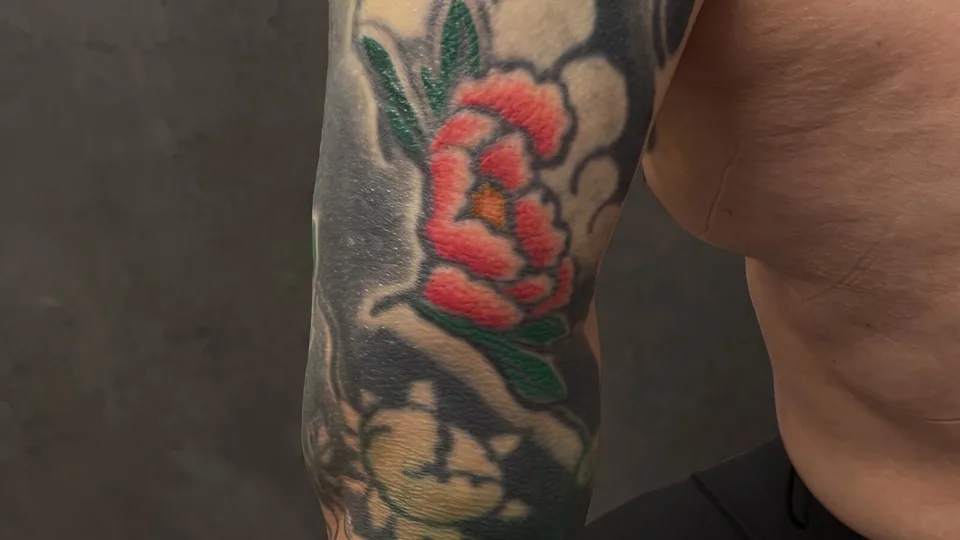
During a wabori consultation, you'll often hear unfamiliar words like sujibori (outline) and hikae (chest panel). This article is a quick-reference glossary you can pull up on the spot. It gives short definitions for sujibori, bokashi, nuki-bori, gaku-bori, mikiri, hikae, and sleeve lengths, with English terms included for visitors from abroad.
How to Use This Glossary
During a wabori consultation, an artist might ask, "Shall we start with just the sujibori?" or "How far should the hikae go?" If you don't know the words, it's hard to answer on the spot. This article is a small glossary built for exactly that moment. Each term gets a short definition, with English wording that visitors can use. We leave detailed technique explanations to other articles and focus here on simply defining what each word means. Once you know the terms, the artist's explanations become much easier to follow.
This glossary covers terms for line work and shading, the presence or absence of a background, the boundary of a design, and the extent of coverage on the chest and arms. The definitions draw on a glossary from academic research on Tokyo tattooing [1] and on explanations from specialist sites [2, 3, 6]. That said, the shape, terminology, and interpretation of gaku-bori (background work) can vary by artist lineage and where they trained. Treat the definitions here as a starting point, and always confirm the final scope and shape with your artist.
Line and Shading Terms: Sujibori and Bokashi
Sujibori refers to tattooing the outline of a design, or to the outline itself [2]. In English it's written as "Sujibori (Outline)" [3]. Since bokashi shading goes inside the sujibori lines, the outline is what establishes the design's overall framework [2]. Because the placement and scale of a piece become visible at the line stage, a conversation about sujibori is also a conversation about where the design will sit. If an artist says "let's start with just the sujibori," it means tattooing the outline first, before anything else.
Bokashi is the technique of shading the inside of the sujibori outline with gradations of black ink, creating a sense of depth [2]. In English it's written as "Bokashi (Shading)" [3]. If the outline is the skeleton, bokashi is the flesh built on top of it. Even with the same underlying sketch, the way the gradation is applied can change the impression dramatically. We go into how that gradation is built, and how the results can differ, in a separate article on bokashi technique. When an artist mentions "bokashi" during a consultation, they mean the shading inside the outline.
Terms for Background: Nuki-bori and Gaku-bori
Nuki-bori means tattooing only the main subject, without a gaku (background) [2]. A koi is placed on the skin as just a koi, a dragon as just a dragon; a glossary of Tokyo tattooing describes it as "the subject alone, with no gaku or background" [1]. Alternate names include danna-bori and uki-bori [2]. In English it's written as "Nuki-bori," with "danna-bori" and "uki-bori" listed as alternate names [3]. If an artist says "nuki de" during a consultation, they mean without a background.
Gaku is the background that surrounds the central design [1]. Gaku-bori means tattooing a gaku of clouds, flames, waves, swirls, or rocks around the main subject; some sources also call it keshō-bori (decorative carving) [2]. Put another way, gaku-bori is nuki-bori with a mikiri (background) added [6]. Since the choice of background shapes the flow of the whole design, the meaning of motifs like clouds and waves is covered in detail in our article on gaku backgrounds.
Terms for the Design's Boundary: Mikiri and Its Shapes
Mikiri refers to the boundary of the overall design [1]. Some sources describe it as the point where the tattoo stops, or the area left untattooed [6]. Because it determines where a piece ends and what shape that edge takes, it always comes up when discussing sleeve length or hikae. Choosing a mikiri shape decides where and how a gaku-bori piece comes to an end.
Mikiri come in named shapes. Botan mikiri rounds the edge of a sleeve or hikae into a semicircle [6]. Akebono mikiri lets the edge fade out through shading [6]. Bukkiri cuts the edge off in a straight line [6]. The glossary of Tokyo tattooing also lists bokashi mikiri and matsuba mikiri as further names [1]. We break down how each shape differs, and how they relate to munewari (chest divide), with diagrams in our article on gaku-bori, mikiri, and munewari.
Comparison of sleeve mikiri
- Botan mikiri
- The edge ends in a rounded semicircle.
- Bukkiri
- The edge ends in a straight line.
- Akebono mikiri
- The edge fades out through shading.
Terms for the Chest Design: Hikae
Hikae refers to the section running from shoulder to chest, and to that part of the composition as a whole. A glossary of Tokyo tattooing describes it as a "chest plate" covering the shoulder and chest [1]. Specialist sites describe it as a rounded gaku shape extending from the base of the arm into the chest, also called taiko (drum) [2, 6]. In English it's written as "Hikae," with "Taiko" given as an alternate name [3]. When deciding on sleeve length, the hikae is something to think through at the same time.
The scope of a hikae isn't fixed, and sources describe it differently. Some sources describe a style that runs from the base of the arm to just above and below the nipple on the chest [6]. The glossary also distinguishes between asai hikae (shallow hikae) and fukai hikae (deep hikae) [1]. How far it extends across the chest, and what shape its edge takes, is something you decide with your artist, along with the mikiri shape. Telling your artist "shallow" or "deep" during a consultation helps move the conversation along.
Range of hikae
- Shallow hikae
- A small area around the shoulder.
- Deep hikae
- Extends farther across the chest, near the nipple.
- Taiko
- Another name for hikae.
Terms for Arm Coverage: Gobu-sode, Shichibu-sode, and Naga-sode
Wabori arm pieces are named by sode (sleeve) length, describing how far the tattoo extends toward the wrist. Gobu-sode is described by some sources as reaching about to the elbow [2]. In English it's written as "gobu-sode (Half Sleeve)" [3]. In a consultation, use it to mean "roughly to the elbow," and confirm with your artist whether the cut falls above or below the elbow itself.
Shichibu-sode is described by some sources as reaching just above the midpoint between elbow and wrist [2]. In English it's written as "shichibu-sode (3/4 sleeve)" [3]. It's safe to think of it as covering the forearm below the elbow, though the exact endpoint varies by design. A sleeve reaching to about the wrist is called jūbu-sode [2] or naga-sode.
Arm coverage by sleeve length
- Gobu-sode / Half sleeve
- Reaches roughly to the elbow.
- Shichibu-sode / 3/4 sleeve
- Covers the forearm below the elbow.
- Naga-sode / Jūbu-sode / Full sleeve
- Reaches roughly to the wrist.
Index in Japanese Alphabetical Order (with English Terms)
Akebono mikiri: a mikiri shape that ends by fading into shading [6]. Asai hikae: a term for a shallow hikae [1]. Uki-bori: an alternate name for nuki-bori, "uki-bori" [2, 3]. Gaku: the background surrounding the central design, "GAKU" [1]. Gaku-bori: tattooing a gaku around the subject, also called keshō-bori [2]. Keshō-bori: some sources treat this as an alternate name for gaku-bori [2]. It's also used to mean supplementary motifs like flowers, distinct from the gaku itself. Gobu-sode: a sleeve reaching roughly to the elbow, "gobu-sode (Half Sleeve)" [2, 3]. Shichibu-sode: a sleeve covering the forearm below the elbow, "shichibu-sode (3/4 sleeve)" [2, 3]. Jūbu-sode: a sleeve reaching to about the wrist [2]. Sujibori: tattooing the outline, "Sujibori (Outline)" [2, 3].
Taiko: an alternate name for hikae, "Taiko" [2, 3, 6]. Danna-bori: an alternate name for nuki-bori, "danna-bori" [2, 3]. Naga-sode: a sleeve reaching to the wrist. Nuki-bori: tattooing the subject alone, with no background, "Nuki-bori" [2, 3]. Hikae: the section running from shoulder to chest, "Hikae" [1, 3]. Fukai hikae: a term for a deep hikae [1]. Bukkiri: a mikiri technique that cuts the edge in a straight line [6]. Bokashi: the shaded gradation applied inside the sujibori outline, "Bokashi (Shading)" [2, 3]. Bokashi mikiri: a named mikiri shape [1]. Botan mikiri: a mikiri that rounds off in a semicircle [6]. Matsuba mikiri: a named mikiri shape [1]. Mikiri: the boundary of a design [1].
If you want to narrow down which terms to learn first, our team recommends these seven: sujibori, bokashi, nuki-bori, gaku-bori, hikae, gobu-sode, and shichibu-sode. They cover three topics, line and shading, the presence of a background, and the coverage on chest and arms, that are easy to bring up in a first consultation. Finer mikiri shapes can wait until the conversation moves further along.
Alternate Names, Differences Between Artists, and Tips for Consultation
One reason wabori terminology can feel confusing is that several words often point to the same thing. Nuki-bori is also called danna-bori or uki-bori [2, 3]. Hikae is also called taiko [2, 3, 6]. Gaku-bori is also called keshō-bori [2]. A sleeve reaching to the wrist is called either jūbu-sode or naga-sode [2]. Even where the underlying meaning is the same, how artists and sources draw the distinctions can differ. If you hear an unfamiliar term, check this index for alternate names.
It's not just names that shift, shapes and coverage vary by artist too. The shape, terminology, and interpretation of gaku-bori can differ depending on an artist's lineage and where they trained. If your artist's explanation doesn't quite match the definitions here, it may simply be a different name for the same thing. When in doubt, ask, "What range does this term cover here?" If you're speaking English, pairing the romanized terms, "Hikae" or "Nuki-bori," with a short English gloss like "chest plate" or "no background" helps get the point across [1, 3].
The quickest way to keep a consultation moving is to pair the vocabulary with a gesture on your own body. Say "shichibu-sode, with a shallow hikae" while tracing the endpoints on your arm and chest, and you avoid misunderstandings even with some variation between sources. Topics this article doesn't cover in depth are explored elsewhere: how gradation is built in our article on bokashi, how mikiri shapes relate to munewari in our article on gaku-bori, mikiri, and munewari, and the meaning of motifs like clouds and waves in our article on gaku backgrounds. Grasping the vocabulary here first will make those articles easier to follow.
FAQ
What's the difference between sujibori and bokashi?
Sujibori refers to tattooing the outline of a design, or to the outline itself. Bokashi is the technique of shading inside that outline with gradations of black ink to create depth. In English they're written as Sujibori (Outline) and Bokashi (Shading).
What's the difference between nuki-bori and gaku-bori?
Nuki-bori means tattooing the subject alone, with no gaku or background; it's also called danna-bori or uki-bori. Gaku-bori means tattooing a gaku of clouds, flames, waves, swirls, or rocks around the subject. Some sources treat keshō-bori as an alternate name for it, but it's also used for supplementary motifs like flowers, so confirm the meaning with your artist.
What part of the body does hikae refer to?
Hikae refers to the section running from shoulder to chest, and to that part of the composition; it's also called taiko. How far it extends across the chest varies between sources, and there's a distinction between shallow hikae and deep hikae. Confirm the final scope with your artist.
How far do gobu-sode and shichibu-sode extend?
Gobu-sode runs roughly to the elbow, and shichibu-sode covers the forearm below the elbow. Since sources describe the endpoints a bit differently, finer details, like whether the cut falls above or below the elbow, are decided in consultation with your artist.
How should I communicate these terms to an artist in English?
Pairing the romanized terms with a short English gloss helps: Sujibori (Outline), Bokashi (Shading), Nuki-bori, Hikae, gobu-sode (Half Sleeve), shichibu-sode (3/4 sleeve).
References
- [1] Hayley McLaren. NEEDLING BETWEEN SOCIAL SKIN AND LIVED EXPERIENCE: AN ETHNOGRAPHIC STUDY OF TATTOOING IN DOWNTOWN TOKYO. (一橋大学, 2015). doi:10.15057/27146. Link
- [2] 記載なし. 和彫りとは?タトゥーとの違いや値段、人気のデザインも含めて解説. (TATTOO JAPAN, 2023). Link
- [3] 記載なし. Japanese Traditional Tattooing – Explaining the Difference from Tattoos, Prices, and Popular Designs. (TATTOO JAPAN, 2023). Link
- [6] 記載なし. 和彫りの意味と歴史について解説!. (tattoo-design.jp, 2022). Link
Japanese tattoo in Tokyo
Turn Japanese tattoo history into a custom design
Explore traditional motifs, modern Japanese compositions, and the consultation process with our English-friendly Ueno studio.
Related Articles

Wabori Color Basics: Sumi and Vermilion, and How Yellow, Green, and Blue Were Used
What has guided the choice of colors in wabori (traditional Japanese tattooing)? Drawing on dated, documented sources, an English-language record from 1902, Kuniyoshi's Suikoden ukiyo-e prints, and pigment analyses of woodblock prints, we trace how sumi (dark ink), vermilion, yellow, green, and blue have been used. This is not a fixed color chart, but the basic combinations that emerge from the sources.
2026.11.02
The Meaning in Wabori Figure Motifs: A Field Guide from Suikoden to Fudo Myoo
Kumonryu Shishin, Benkei, Fudo Myoo, Sukeroku. Every human figure in wabori comes from a story or a belief behind it. A sword in hand, an angry face, both change meaning once you know the scene they come from. Drawing on ukiyo-e and museum sources, this is a field guide to what these figure motifs mean.
2026.10.19
Gaku Backgrounds in Wabori: How Waves, Clouds, Wind, Rock, and Flame Are Used
In wabori, the background surrounding the main motif is called the gaku. It shows where the main motif stands and how it moves, giving the design depth. Drawing on ukiyo-e prints and museum collections, we look at waves, clouds, wind, rock, and flame one by one, exploring each element's role and its fit with the main motif.
2026.09.21