Shisei, Irezumi, Horimono, Wabori: What Do These Tattoo Words Really Mean?
Published · Updated
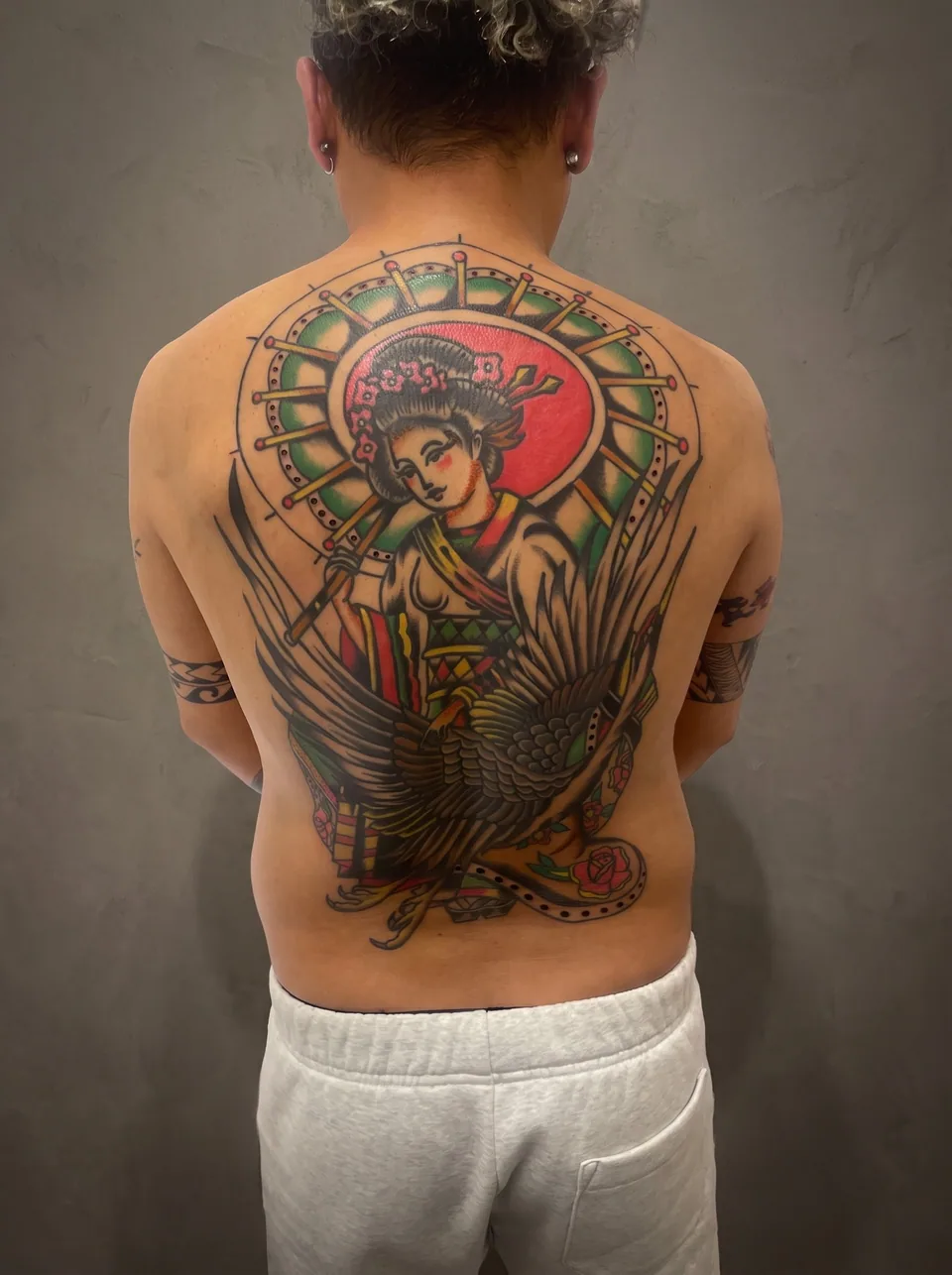
Shisei, irezumi, horimono, and wabori can all describe putting ink into the skin, but each word was born in a different era and used in different settings. We've gone through how dictionaries, official documents, and research use each term, one by one. Knowing the impression each word carries will help you choose the right one for the moment.
Every One of These Words Can Mean the Same Thing: Ink in the Skin
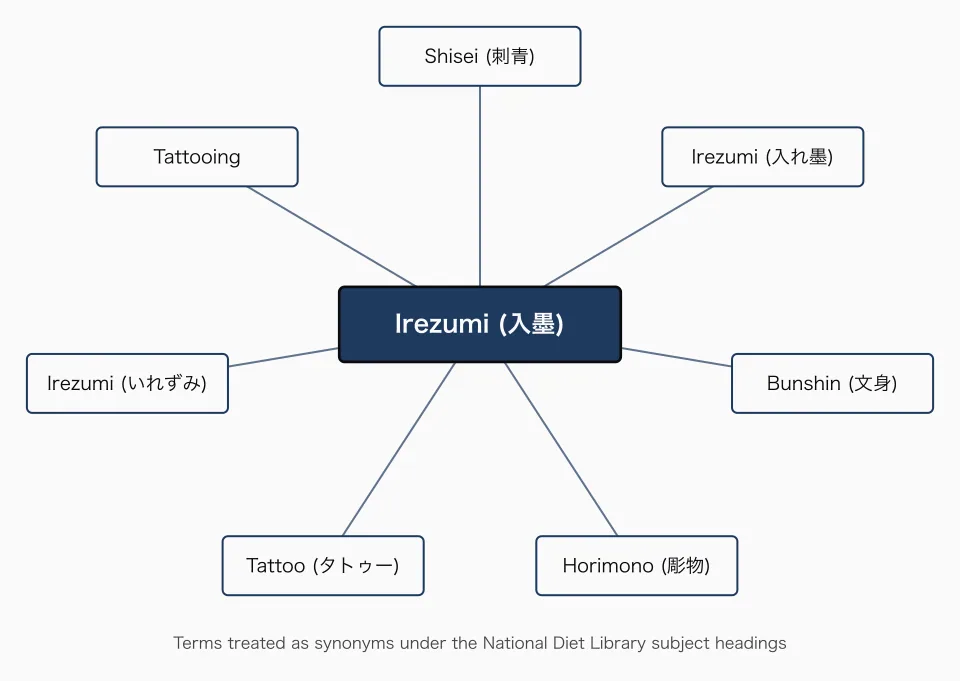
Shisei, irezumi, horimono, and wabori are all words used to describe placing color into the skin to create a design. The National Diet Library uses 'Irezumi' (入墨) as its official subject heading for library searches, with the reading 'IREZUMI' [3]. Under that heading, it lists 'tattoo,' 'irezumi' (in hiragana), 'shisei' (刺青, read as SHISEI), 'bunshin' (文身), and 'horimono' (彫物) as synonyms [3]. For library purposes, these words are treated as a single subject.
The same holds true in kanji dictionaries. Kanjipedia reads 文身 as 'irezumi,' and defines it as cutting the skin and inserting pigment to carve in letters, patterns, or pictures [4]. It notes that this can also be written 刺青・入れ墨 (shisei, irezumi) [4]. In the dictionary, shisei and irezumi are different characters expressing the same meaning. That said, this is only what one dictionary entry covers.
Sharing a meaning doesn't mean the words are received the same way. The Diet Library's subject heading is a tool for finding books; it doesn't claim that each word carries the same history or social image [3]. Each word emerged in a different era and was used in different settings, and that difference still shapes how each one is perceived today.
Irezumi (入墨): A History as Punishment, and Its Use in Official Documents Today
'Irezumi' (入墨) carries a history as a criminal punishment from the Edo period. A doctoral dissertation from Ritsumeikan University states that irezumi was revived as a punishment during the Edo period, citing records of its use in 1665 and 1682 [2]. It further states that the punishment was formally codified on February 17, 1720 [2]. This was a way of marking the body of someone who had committed a crime.
At the same time, it would be wrong to say 'irezumi refers only to punishment.' Kanjipedia lists 刺青・入れ墨 (shisei, irezumi) among the ways to write the meaning of carving letters or pictures as decoration [4]. It notes that the meaning of piercing ink into the face or arms to mark someone with a criminal record is, properly speaking, written with the character 黥 (gei) [4]. In practice, the word can refer to either a punitive mark or a decoration, and the association with punishment simply tends to surface more strongly depending on context.
In official documents today, 'irezumi' is used quite ordinarily. A notice issued by the Ministry of Health, Labour and Welfare on March 18, 2016, together with an attached Japan Tourism Agency document, uses 'irezumi (tattoo)' both in its heading and body text [6]. Materials from the National Consumer Affairs Center of Japan likewise use 'irezumi' to describe the act of inserting pigment into the skin with a needle tip [8].
Timeline of notation for irezumi and shisei
- 1665 and 1682
- Records of irezumi carried out as a punishment
- February 17, 1720
- Irezumi codified in law as a punishment
- 1721
- "Horimono" used as a word in Onnagoroshi Abura no Jigoku
- 1910
- Junichiro Tanizaki's story "Shisei"
- March 18, 2016
- A Ministry of Health, Labour and Welfare notice and a Japan Tourism Agency document write "irezumi (tattoo)"
- September 16, 2020
- A Supreme Court decision uses "tattoo shop"
Shisei: A Way of Writing 'Irezumi' Used for Decoration
'Shisei' (刺青) is a way of writing the word that dictionaries list alongside 'irezumi' [4]. It's commonly read as 'irezumi,' but the National Diet Library's subject heading also lists the on'yomi reading 'SHISEI' as a synonym [3].
In literature, the best-known example is Junichiro Tanizaki's short story 'Shisei' ('The Tattooer'). The dissertation cited above discusses how irezumi has been depicted in painting and literature, and cites this work as dating from 1910 [2].
Materials from the National Consumer Affairs Center of Japan refer to decorative body ink as 'shisei,' 'tattoo,' and 'Tattoo' [8]. This is a convenient distinction made within that particular document, not a rule that applies across society as a whole [8]. Even so, it's a useful example of 'shisei' being chosen when the intent is to emphasize the decorative meaning.
Horimono: A Word for Pictures Born in Edo
'Horimono' is a word with examples preserved in Edo-period literature. The dissertation treats an example from 1721 in Chikamatsu Monzaemon's 'Onnagoroshi Abura no Jigoku' as one of the earliest known uses of 'horimono' [2]. That's just one year after 1720, the year irezumi is said to have been codified as punishment [2].
The same dissertation treats 'horimono' as a pictorial form of irezumi [2]. Rather than a mark left as a brand, it represents the view of a picture carved into the skin.
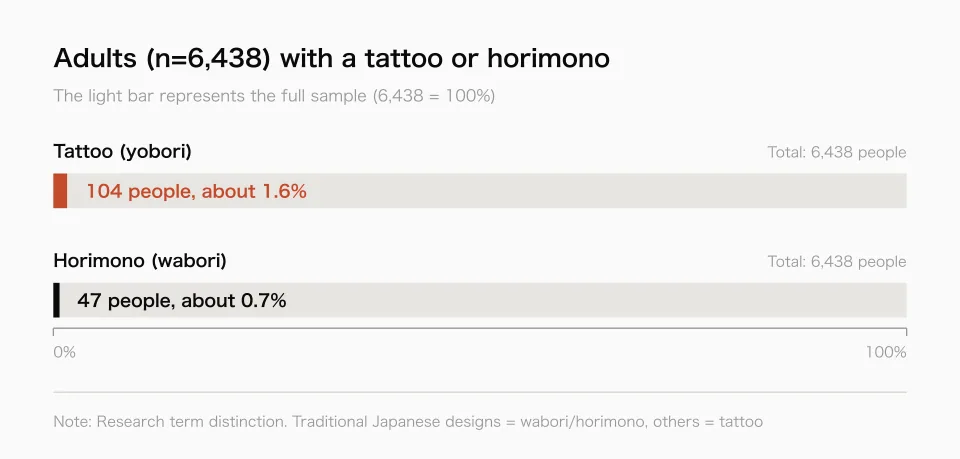
'Horimono' is still used in research today. A study surveying 6,438 adult men and women used the terms 'wabori' and 'horimono' for traditional Japanese designs when tallying its results [1]. In that survey, 47 of the 6,438 participants, about 0.7%, had horimono [1].
Wabori: A Word for Traditional Japanese Designs
'Wabori' is sometimes used to refer to traditional Japanese designs. The survey of 6,438 people used 'horimono' for traditional Japanese designs and 'tattoo' for Western-style designs (yobori), combining both under the label 'irezumi' [1]. This was a convenient distinction made for the purposes of tallying results.
Interview-based research on public bathing facilities also notes that the Japanese word 'irezumi' tends to bring to mind traditional wabori, while 'tattoo' brings to mind Western-style designs such as lettering, flowers, or crosses [7]. That same study notes that wabori and yobori are sometimes combined, which is why the author himself writes both together as 'irezumi' [7]. In practice, the line between Japanese and Western styles isn't always so clear in actual designs.
One word often confused with wabori is 'tebori' (hand-poking). On this site, we use 'wabori' to describe a design lineage, and 'tebori' to describe the traditional technique of inserting ink by hand-pushing a needle. A design being wabori doesn't necessarily mean it was done by tebori. Please note that we do not offer tebori at our studio. If you'd like a traditional Japanese design, please let us know what design you have in mind and where you'd like it during your consultation.
Tattoo and Irezumi: Words Used in Court Documents and Research Too
The word 'tattoo' is used in court documents as well. A Supreme Court decision dated September 16, 2020, concerning a case involving tattoo procedures, uses the terms 'tattoo shop' and 'tattoo procedure' [5]. This is an example of the word 'tattoo' appearing in an official legal document.
Research also uses 'tattoo' to refer to Western-style designs. In the survey of 6,438 people, 104 participants, about 1.6%, had tattoos, and 47, about 0.7%, had horimono [1]. Under this survey's categories, 'tattoo' refers to anything other than traditional Japanese designs [1]. In everyday conversation, 'tattoo' is sometimes used more broadly to include Japanese-style designs as well, so the scope of the word shifts depending on context.
'Irezumi' is simply the Japanese word 'いれずみ' spelled out in roman letters. The National Diet Library's subject heading gives the reading of 入墨 as 'IREZUMI' and lists the English word 'Tattooing' as a synonym [3]. It also notes that 文身 is read the same way, 'IREZUMI' [3]. The dictionary states that 文身 can also be written 刺青・入れ墨 [4]. 'Irezumi' is simply the romanized form that corresponds to these readings.
How the Word You Choose Changes How It's Received
Even when the meaning is the same, the word you choose can change how it's received. One study interviewed ten facilities, including public bathhouses and hot spring inns, along with hot spring and tourism associations [7]. Citing a 2014 survey by the Kanto Federation of Bar Associations, this study notes that a certain number of people find 'tattoo' more acceptable than 'irezumi' [7]. It's an example of how a single word choice can change the impression people have of the exact same thing.
Behind this lies a difference in the images each word evokes. The same study notes that 'irezumi' tends to bring to mind traditional wabori designs, while 'tattoo' evokes Western-style designs such as lettering or flowers [7]. On top of that, 'irezumi' carries a history of having been used as a criminal punishment during the Edo period [2]. The meaning of marking a criminal record is, properly speaking, written with the character 黥 [4].
Regarding foreign visitors with tattoos bathing in Japan, there is official guidance on points to keep in mind. A 2016 notice from the Ministry of Health, Labour and Welfare, along with its attached Japan Tourism Agency document, calls for awareness that people have tattoos for a variety of reasons, including religion, culture, and fashion [6]. It also notes that having a tattoo does not in itself create a hygiene problem [6]. Suggested approaches for bathing facilities include covering tattoos with stickers, not requiring special measures for tattoos that are palm-sized and not intimidating, and offering specific time slots or private baths as alternatives [6].
How to Talk to a Studio About What You Want
When consulting with a studio, what matters most isn't which word you use, it's describing specifically what you want. Menu names and terminology differ from studio to studio. If you tell us the design you want, where you want it, the size, and whether you want color, the conversation will go smoothly whether you call it shisei or tattoo. If you have reference images, please send them along when you book.
If you're hoping for a traditional Japanese design, saying 'a wabori design' or 'a Japanese-style design' will help communicate the direction you're after. When you do, it helps to separate two things: whether you want the design to look Japanese-style, and whether you specifically want the tebori technique. We do not offer tebori at our studio, so please feel free to tell us in detail about the design you have in mind during your consultation.
For visitors from abroad, it's fine to simply say 'tattoo' in English. If you're interested in traditional Japanese designs, feel free to use the word 'irezumi' as well. If you're unsure which word to use, or if you haven't settled on a design yet, please reach out when you book. Whatever word you use, we'll work with you to bring your design to life.
FAQ
Do shisei and irezumi mean different things?
In dictionaries, they're different ways of writing the same meaning. Kanji dictionaries state that carving letters, patterns, or pictures into the skin by inserting pigment can be written as either 刺青 or 入れ墨. That said, irezumi also carries a history of having been used as a punishment during the Edo period, so the impression it gives can shift depending on context.
Is irezumi used only to mean punishment?
No. Dictionaries also list 'irezumi' as a way of writing the meaning of carving letters or pictures as decoration. Documents from the Japan Tourism Agency and the Ministry of Health, Labour and Welfare also use the wording 'irezumi (tattoo).'
Since when has the word horimono been used?
Examples are known from the Edo period. A 1721 usage in Chikamatsu Monzaemon's 'Onnagoroshi Abura no Jigoku' is considered one of the earliest known examples of the word horimono.
Do wabori and tebori mean the same thing?
No, they're not the same. On this site, we use 'wabori' to mean traditional Japanese designs, and 'tebori' to mean the technique of inserting ink by hand-pushing a needle. Please note that we do not offer tebori at our studio.
What does irezumi mean?
It's simply the Japanese word 'いれずみ' written out in roman letters. The National Diet Library's subject heading also gives the reading of 入墨 as irezumi, and lists the English word 'Tattooing' as a synonym.
Which word should I use when talking to a studio?
What matters more than the word you use is describing specifically the design you want, where you want it, the size, and whether you want color. If you're hoping for a traditional Japanese design, saying 'a wabori design' or 'a Japanese-style design' will help communicate the direction you're after. If you're unsure, feel free to ask when you book.
References
- [1] 鈴木公啓、 大久保智生. いれずみ(タトゥー・彫り物)の経験の実態および経験者の特徴. (大阪大学学術情報庫OUKA/対人社会心理学研究, 2018). doi:10.18910/70538. Link
- [2] 大貫菜穂. 変身装置としての「ほりもの」 イレズミの絵画的・文学的表象分析. (立命館大学大学院先端総合学術研究科, 2014). Link
- [3] 国立国会図書館. 入墨. (国立国会図書館典拠データ検索・提供サービス(Web NDL Authorities), 2019). Link
- [4] 公益財団法人日本漢字能力検定協会. 〈文身〉. (漢字ペディア). Link
- [5] 最高裁判所第二小法廷. 平成30年(あ)第1790号 医師法違反被告事件. (最高裁判所, 2020). Link
- [6] 観光庁、厚生労働省医薬・生活衛生局生活衛生・食品安全部生活衛生課. 入れ墨(タトゥー)がある外国人旅行者の入浴に関する対応について②. (観光庁、厚生労働省, 2016). Link
- [7] 関谷大輝. 入墨・タトゥーがある客の利用可否をめぐる現状と課題 公共入浴施設等へのインタビュー調査に基づく定性的検討. (日本観光研究学会機関誌『観光研究』, 2022). Link
- [8] 独立行政法人国民生活センター. 第3回 生活衛生関係営業等衛生問題検討会 参考資料1「アートメイクの危害」. (厚生労働省, 2011). Link
Japanese tattoo in Tokyo
Turn Japanese tattoo history into a custom design
Explore traditional motifs, modern Japanese compositions, and the consultation process with our English-friendly Ueno studio.
Related Articles
Reading Edo Tattoo Through Tanizaki's "The Tattooer"
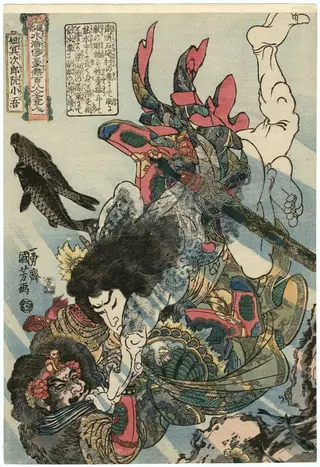
In 1910 a young Tanizaki published "Shisei," a short story about a tattooer who inks a spider on a sleeping girl. The fictional artist draws on the world of Edo horimono. Its history helps explain the story, though documented events and later traditions need to be distinguished.
2026.06.27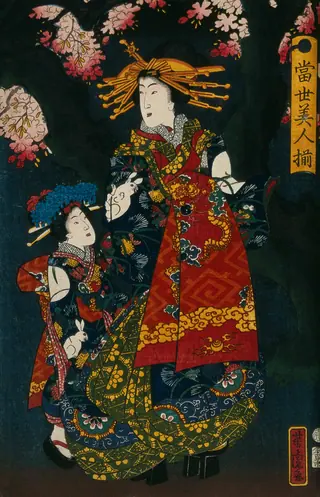
When a Tattoo Meant Forever: Ink and Japan's Pleasure Quarters
Tattoos in Japan have signaled devotion as well as ties to the outlaw world. In the pleasure quarters of the Edo period, courtesans and their patrons inked a name plus the character for life into the skin as a private oath. This article explores the social history of that mark and the conditions in which it was made.
2026.06.27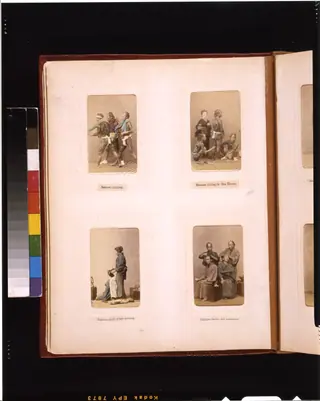
Ink as a Second Skin: The Tattooed Tradesmen of Old Japan
In Edo and early Meiji Japan, tattoos were not only the mark of firemen. They covered the backs of grooms, porters, couriers, and laborers who worked half-dressed and wore ink as a workwear-like covering, as a sign of trade identity, and as plain proof of nerve. This article explores the working history behind those tattoos.
2026.06.27