When a Tattoo Meant Forever: Ink and Japan's Pleasure Quarters
2026.06.27
Before tattoos in Japan signaled the outlaw, they signaled the lover. In the pleasure quarters of the Edo period, courtesans and their patrons inked a name plus the character for life into the skin as a private oath. This is the social history behind that mark, kept grounded and honest about its costs.
Introduction
Ask most people what a Japanese tattoo means and you will hear one word: outlaw. That link is real, and we will get to it. But it is not where the story starts. Long before full-body irezumi marked gamblers and the men who would later become the yakuza, a smaller, more private kind of tattoo carried a very different message. It said: I am yours.
The setting was the pleasure quarters of the Edo period, the licensed districts where courtesans, entertainers, and their patrons lived inside a world apart. There, lovers sometimes had a name cut into the skin, followed by the single character for life, 命 (inochi). It was a vow you could not take back. The practice even has a name in the sources: kishobori, the vow tattoo [1][2].
This article follows that thread from the licensed quarters into the early 1900s. We will look at what the pleasure quarters were, what these vow tattoos said and how common they really were, and how a government ban in 1872 pushed tattooing underground and deepened its tie to the demimonde and outlaw classes. Throughout, we separate what historians document from what later writers romanticized, and we do not gloss over the real human cost of this world.
The floating world and its licensed quarters

In the early 1600s the shogunate decided to corral the sex trade into walled, licensed districts. Edo got the Yoshiwara, founded around 1617 to 1618. After the great Meireki fire of 1657 destroyed much of the city, it was moved out near Asakusa and rebuilt as the Shin-Yoshiwara, the "new" Yoshiwara [3]. Kyoto had its Shimabara and Osaka its Shinmachi. These were not back alleys. The Yoshiwara was a planned town behind a moat, reached through one main gate [3].
People called this whole sphere the ukiyo, the "floating world." The word once carried a gloomy Buddhist sense, the idea that life is fleeting and full of sorrow. In the Edo period writers flipped it on its head. If life floats by, the thinking went, then float with it and enjoy the moment [4]. Theater, fashion, music, poetry, and the woodblock prints we now call ukiyo-e all grew out of this scene [3][4].
Who the women were
The glamour was real on the surface and grim underneath. The top-ranked courtesans, the tayu and later the oiran, were trained in poetry, calligraphy, music, and conversation, and they were a tiny minority. By Nippon.com's account, in the Yoshiwara from the mid-18th century the elite oiran made up only about two percent of an estimated three to five thousand women [3]. Most were not stars. They were girls from poor families, handed to the brothels to repay money advanced to their parents, and held there by debt [3][5]. Keep that picture in mind. The vow tattoos we are about to discuss happened inside this system, not in a free romance.
A name and the character for "life"
Japan has older and separate tattoo histories, from prehistoric and regional body marking to tattooing used as a criminal punishment [6]. But in the Edo-period revival of voluntary tattooing on the mainland, the early references to decorative marks are tied to courtesans and their favored clients, who are said to have pledged eternal devotion by cutting the lover's name into the skin [6]. The scholarly studies of Japanese tattooing, by Cecilia Segawa Seigle and by Willem van Gulik, give the practice its names and detail [1][2].
There were two main forms. The simpler one was irebokuro, literally an "inserted mole": a single small dot tattooed in the web of skin between the thumb and forefinger. Lovers placed it there for a reason. When the two of them held hands, their dots pressed together [1]. The fuller form was kishobori, the vow or pledge tattoo. Here the lover wrote out a name on the inner arm, which sources place variously on the upper arm, the inner arm, or in some accounts the inner thigh, often followed by the character 命, inochi, "life." Read together, a mark like "...*inochi*" meant something close to "yours for life" [1][2].
These were intimate, hidden marks, not the broad pictorial designs that come to mind today. A courtesan might ink the tattoo herself, or ask a friend, though by some accounts she would rather her lover do it [1][2]. The point was proof. In a world where a patron's affection could be performance and a courtesan's words were part of the trade, a tattoo was a claim that could not be faked or erased.
One promise among many
The vow tattoo did not stand alone. It belonged to a whole grammar of pledges that historians group under shinju, acts meant to prove fidelity. By the standard accounts of the quarters, lovers exchanged written oaths, sometimes signed in blood, and in more extreme tellings a person might cut off a lock of hair, tear out a fingernail, or sever a fingertip and send it to the beloved [1][5]. How literally to take the most drastic of these is itself uncertain, as the next part discusses.
The gentlest echo of this vow culture survives in daily life. The Japanese pinky promise, yubikiri, literally means "finger cutting," and by its usual telling it is linked to the pledges of the pleasure quarters, where a severed fingertip is said to stand behind the gesture children now make with a linked little finger. We have not found a primary source that ties the modern gesture directly to an actual finger-cutting in the quarters, so treat the connection as the customary etymology rather than documented fact [1]. The vow tattoo sits on this same spectrum. A dot or a name was the version you carried on your body for good.
Legend versus record
Honesty matters here. We have solid evidence that these customs existed and what they were called, from period sources and from later scholarship [1][2][5]. What we cannot do is count them. No one knows how many courtesans actually wore a lover's name, or how often a finger was really sacrificed versus merely promised. The sources themselves hedge. Even careful writers say couples "are said to have" pledged this way [6]. And historians warn that almost everything we have about these women was written and pictured by men, for men, which means the romance may be thicker than the record [5]. Treat the dramatic single cases as illustration, not as the everyday.
From lovers to outlaws
The same period that gave tattoos a romantic meaning also gave them a rougher one. Tattooing spread among working men whose jobs left them stripped down: couriers, day laborers, and above all the firefighters and steeplejacks who tore down buildings to stop a blaze. With little clothing to wear, decorated skin became their covering and their pride [6]. From there the art moved into bolder, full-body pictorial designs over the 18th and 19th centuries.
Gamblers became associated with elaborate tattooing as well. The bakuto, itinerant gamblers active from the 1700s onward, are usually counted, alongside the peddler tekiya, among the forerunners of the modern yakuza, and by some accounts they too came to carry heavy decorative tattoos [7]. The same world is often credited with yubitsume, cutting off part of a finger to apologize, though the firmer history of these underworld customs needs more than a general reference to pin down [7].
So by the late Edo period, irezumi pointed in two directions at once. It could mean the tenderness of a vow in the pleasure quarters, or the nerve of a gambler and a tough. Both lived in the demimonde, the half-lit society on the edge of respectable life. The same kind of mark that sealed a courtesan's promise could also brand a man as someone the authorities watched.
The 1872 ban and the door that stayed open
Then the rules changed. In 1872 the new Meiji government banned decorative tattooing outright, forbidding both the giving and the receiving of it [6]. The motive was image. Japan was opening to Western powers and racing to look modern, and officials feared tattoos made the country seem backward [6][8]. Paired with new rules against public nudity, the ban pushed irezumi out of sight.
It did not kill the practice. It drove it into back rooms, where it survived among the very groups already on society's margins, including the criminal underworld [6][8]. That is the turn that hardened the outlaw association we still feel today. A custom that had once been openly worn by firefighters and lovers became something hidden, and hidden things take on the color of whoever keeps them alive.
The foreign exception
There was, by some accounts, a loophole. Several histories hold that the ban fell on Japanese subjects rather than foreign visitors, and that tattooists in the treaty ports were tolerated as long as they worked on outsiders [8]. We have not confirmed the exact legal status or the specific port list against a primary text, so take the detail as the common telling rather than settled law. What is better attested is the clientele: sailors and travelers, and by various accounts a string of European royals, among them the future George V and the future Tsar Nicholas II, came to be inked by Japanese masters [6][8]. So as the art went underground at home, it kept a more public life on the skin of outsiders. The legal ban was lifted only in 1948, under the postwar Occupation [6][8].
What is documented, and what is romance
It helps to be clear about the ground under our feet. Well documented: the licensed quarters and their dates, the floating world and its arts, the named vow customs (irebokuro, kishobori, the broader shinju), the spread of tattooing among laborers and gamblers, and the 1872 ban with its foreign exception [1][2][3][6][7][8]. These rest on period records and on the standard scholarly works [1][2].
More romanticized: the sweeping image of doomed lovers branding each other for life as a common, freely chosen act. The custom was real, but it lived inside a trade built on debt and the sale of girls by poor families [3][5]. By the figure that Collectors Weekly carries from the Asian Art Museum's exhibition catalog, the graveyard at Jōkanji in Edo holds the remains of more than twenty-one thousand prostitutes who died, many in their twenties, with no one to pay for a funeral [5]. The art that made the floating world look like paradise was made by men, for male customers, and it should not be read at face value [5].
Holding both halves at once is the honest position. A name plus inochi on a forearm can be a genuinely moving thing. It can also be a small act of will inside a life with very few choices. Neither truth cancels the other.
Why this history still speaks to a visitor
For a traveler curious about Japanese tattooing, this older layer is worth knowing because it complicates the cliché. The mark on the skin was not always a warning. For a stretch of history it was a love letter you could not lose, a private syllable of devotion exchanged in a closed world. That older meaning still sits underneath the bolder traditions that came later.
It also explains the mixed feelings tattoos can still carry in Japan. The outlaw association did not come from nowhere, but it was not simply ancient or inevitable either. Tattooing had already been used as a criminal punishment from the early 18th century, and the mark carried disrepute in parts of Edo society [6]. What the 1872 ban did was sharpen that older association in the modern era and push a once-open custom out of sight, where it lingered among groups already on the margins [6][8]. Knowing that history makes the modern situation easier to read, including why some baths and pools still post their own rules.
Evis works with visitors who want both the travel and the tattoo, and we think the social history is part of the experience, not a footnote to it. If a piece you are considering nods to this past, it is worth understanding what it once meant and the real lives behind it. We try to hold the romance and the hard facts together, and to never glamorize the exploitation that ran alongside the beauty.
References
- Cecilia Segawa Seigle. Yoshiwara: The Glittering World of the Japanese Courtesan. University of Hawaii Press, 1993. https://archive.org/details/yoshiwaraglitter0000seig
- Willem R. van Gulik. Irezumi: The Pattern of Dermatography in Japan. E. J. Brill, 1982. https://www.nli.org.il/en/books/NNL_ALEPH990031279890205171/NLI
- Nippon.com. The Yoshiwara Pleasure Quarters: A Cradle for Japan's Edo Culture. Nippon.com, 2021. https://www.nippon.com/en/japan-topics/g00885/
- Department of Asian Art, The Metropolitan Museum of Art. Art of the Pleasure Quarters and the Ukiyo-e Style. Heilbrunn Timeline of Art History, 2004. https://www.metmuseum.org/toah/hd/plea/hd_plea.htm
- Lisa Hix / Collectors Weekly. Sex and Suffering: The Tragic Life of the Courtesan in Japan's Floating World. Collectors Weekly, 2015. https://www.collectorsweekly.com/articles/the-tragic-life-of-the-courtesan-in-japans-floating-world/
- Nippon.com. "Irezumi": The Japanese Tattoo Unveiled. Nippon.com, 2020. https://www.nippon.com/en/views/b06701/
- Wikipedia contributors. Bakuto. Wikipedia. https://en.wikipedia.org/wiki/Bakuto
- Rosie Saunders / Medium. Unpacking the History of Irezumi, Japan's Signature Style of Body Art. Medium, 2020. https://medium.com/@itsrosiesaunders/unpacking-the-history-of-irezumi-japans-signature-style-of-body-art-31b2acd1df10
FAQ
What was a kishobori, or vow tattoo?
Kishobori was a pledge tattoo used in Japan's Edo-period pleasure quarters. A courtesan or lover had a partner's name inked on the inner arm, by some accounts the upper arm or inner thigh, often followed by the character 命 (inochi), meaning "life." Read together, it meant something like "yours for life." The standard scholarly studies by Cecilia Segawa Seigle and Willem van Gulik record the custom and its name [1][2].
How common was it for courtesans to tattoo a lover's name?
We know the custom existed and what it was called, from period sources and later scholarship [1][2]. We cannot say how common it was. No reliable count survives, and the sources themselves hedge, often saying couples "are said to have" pledged this way [6]. Most of what we have was created by men for male audiences, so the romance is likely heavier than the record. Treat dramatic single cases as illustration, not the everyday [5].
Is the Japanese pinky promise really linked to this?
By its usual telling, yes. The pinky promise, yubikiri, literally means "finger cutting," and it is commonly traced to the pledges of the pleasure quarters, where cutting off a fingertip was said to be a grim proof of devotion. We have not found a primary source that ties the modern children's gesture directly to an actual finger-cutting in the quarters, so treat this as the customary etymology rather than documented fact. The vow tattoo sat on the same spectrum of pledges, alongside cut hair, torn fingernails, and blood oaths [1][5].
Why did tattoos become linked to outlaws in Japan?
Policy hardened a link that was not purely ancient. Tattooing had already served as a criminal punishment from the early 18th century and carried disrepute in parts of Edo society. In 1872 the Meiji government banned decorative tattooing to look modern to Western powers, which drove the art underground and sharpened that older association, where it lingered among groups on the margins, including gamblers (bakuto) and the emerging criminal underworld. By several accounts, tattooists could still work on foreign visitors in the treaty ports, though the exact legal status is not firmly settled here. The ban was lifted in 1948 [6][7][8].
What were the pleasure quarters and the floating world?
The pleasure quarters were licensed entertainment and sex-trade districts, the most famous being Edo's Yoshiwara, founded around 1617 to 1618 and rebuilt near Asakusa after the 1657 fire [3]. The wider sphere was called the ukiyo, or "floating world," a name that turned a Buddhist idea about life's impermanence into a call to enjoy the passing moment. It nurtured theater, fashion, and ukiyo-e woodblock prints [3][4].
Booking
Curious about the studio's atmosphere or pricing? Our online booking page shows open slots and size-based estimates — take a look whenever you're ready.
View the booking pageRelated Articles

Reading Edo Tattoo Through Tanizaki's "The Tattooer"
In 1910 a young Tanizaki published "Shisei," a short story about a tattooer who inks a spider on a sleeping girl. The artist is invented. The world he comes from was not. Here is the real history of Edo horimono behind the fiction, kept honest about what is documented and what is myth.
2026.06.27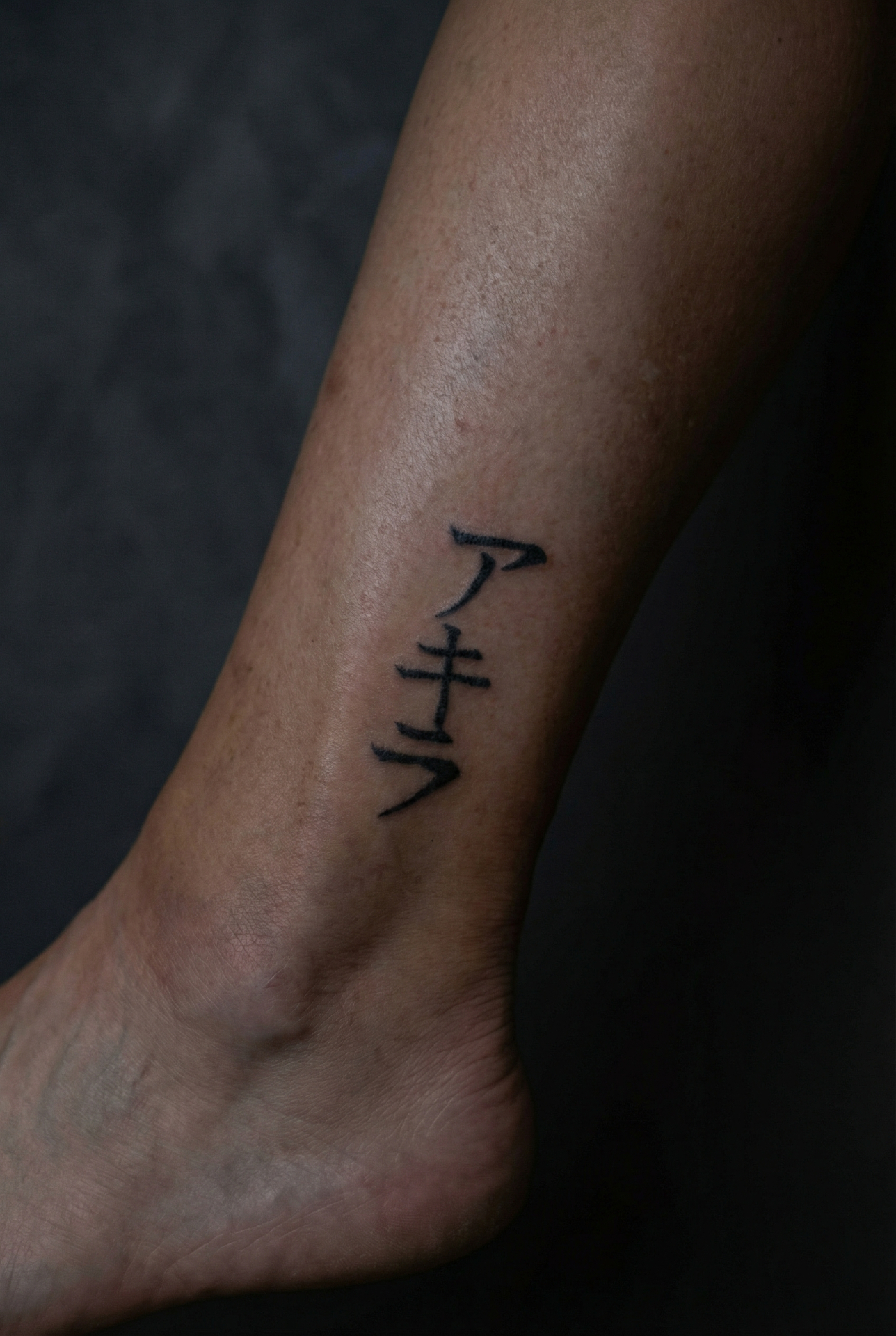
Kanji Tattoos That Went Wrong, and How to Get Yours Right
A single misread stroke can turn "big" into "dog," and a quick app translation can leave you wearing the words for a charcoal grill. Many documented kanji tattoo mistakes come from avoidable checks being skipped. Here is why they fail, with real cases, plus a plain checklist for getting one that says what you mean.
2026.06.27
Ink as a Second Skin: The Tattooed Tradesmen of Old Japan
In Edo and early Meiji Japan, tattoos were not only the mark of firemen. They covered the backs of grooms, porters, couriers, and laborers who worked half-dressed and wore ink as a workwear-like covering, as a sign of trade identity, and as plain proof of nerve. Here is that working history, kept honest.
2026.06.27